

Why Choose a Plug-In Hybrid? Toyota PHEV Benefits Explained
Drivers in Temecula keep asking the same question. Is a plug-in hybrid actually worth it? A Toyota plug-in hybrid vehicle (PHEV) answers that question by refusing to make you choose. Your daily errands and commute can run entirely on electricity. The gasoline engine stays ready for the trips where charging stations are beside the point.
That dual nature is the whole argument. Short trips around town happen in quiet, zero-emission electric mode. When the battery runs low, the vehicle switches to standard hybrid operation on its own. You do nothing, and you never hunt for a charger. You get the running costs of an electric car on the days that matter most. You get the range of a gas car on the days you need it.
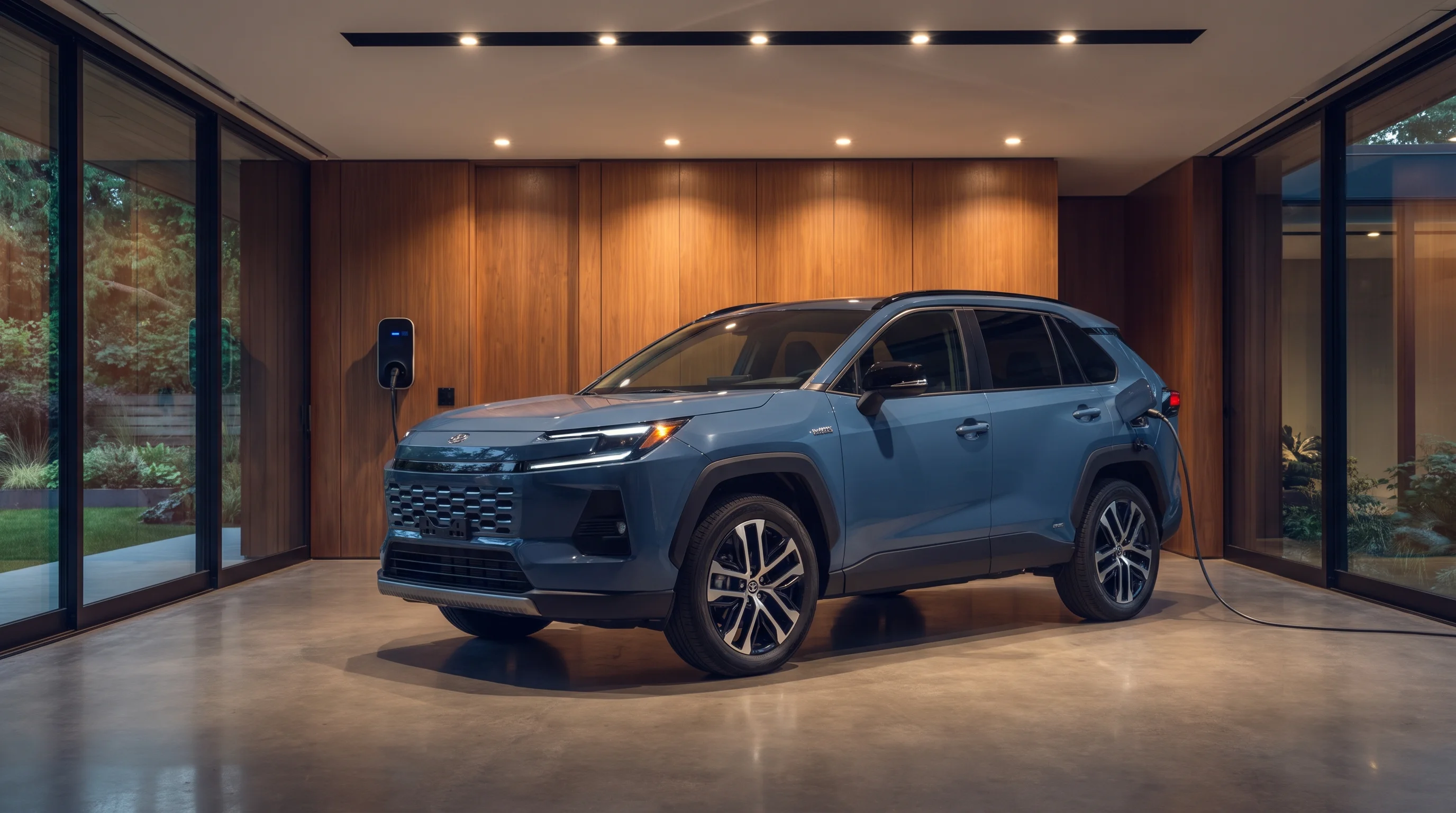
What Makes a Plug-In Hybrid Different From a Standard Hybrid
Both a standard hybrid (HEV) and a plug-in hybrid pair a gasoline engine with electric motors. The difference comes down to battery size and how the battery gets refilled.
How a Standard Hybrid Works
A standard Toyota hybrid refills its battery two ways. It captures energy through regenerative braking, and it draws on the gasoline engine. You cannot plug it in. It runs on electricity alone only at low speeds, and only for short distances.
How a Plug-In Hybrid Works
A Toyota plug-in hybrid carries a much larger battery, and that battery connects to an outlet. The extra capacity lets a PHEV cover real distance on electricity alone, including at highway speeds. For most drivers, a full charge covers a typical daily commute with no gasoline used at all. When the charge runs out, nothing dramatic happens. The vehicle simply works as a highly efficient standard hybrid, with the engine and electric motors sharing the load.
Why a Plug-In Hybrid Instead of an All-Electric Vehicle
Range Anxiety Never Enters the Picture
An all-electric vehicle depends entirely on charging infrastructure for long trips. That means route planning and scheduled stops when you drive through areas with thin public charging coverage. A plug-in hybrid sidesteps the problem. The gasoline engine refuels at any station in minutes.
Charging Is Simpler
PHEV batteries are smaller than the ones in all-electric vehicles. They do not need high-voltage DC fast charging to be practical. For most plug-in hybrid owners, a standard household outlet and an overnight park is the entire charging strategy. That makes the move to electrified driving far easier if you have no specialized equipment at home. For the full three-way picture, our Toyota hybrid vs plug-in hybrid vs EV guide walks through every powertrain we sell.
The Toyota Plug-In Hybrid Lineup
Two Toyota models carry plug-in hybrid powertrains, and they answer different needs.
Prius Plug-in Hybrid
The Prius Plug-in Hybrid is the efficiency specialist. An aerodynamic hatchback pairs a 2.0-liter four-cylinder engine with electric motor-generators for 220 net combined horsepower. Power reaches the front wheels through an electronically controlled continuously variable transmission. A 13.6-kWh lithium-ion battery delivers an EPA-estimated 44 miles of all-electric range on the SE grade, and up to 39 miles on the other grades. Four grades make up the lineup: SE, XSE, Nightshade Edition, and XSE Premium. For 2027, every grade adds Dual-Zone HVAC, and Inked joins the exterior color palette.
RAV4 Plug-in Hybrid
The RAV4 Plug-in Hybrid is the one to look at if you need space and all-weather traction. A 2.5-liter four-cylinder engine works with the electric drive system for 324 net combined horsepower. All-Wheel Drive is standard on every grade. Toyota rates the SE grade at an EPA-estimated 54 miles of all-electric range. It also does something unusual for a plug-in hybrid. The XSE and Woodland grades add a CCS connector with DC fast-charging capability. At a compatible public station, those grades move from 10 percent to 80 percent charge in roughly 30 minutes. The SE and GR SPORT grades charge on Level 1 and Level 2 only. Four grades make up the lineup: SE, Woodland, XSE, and GR SPORT. You can see what is on the lot right now on our RAV4 Plug-in Hybrid inventory page.
2027 Prius Plug-in Hybrid: EPA-Estimated Fuel Economy and Electric Range
Once the battery is depleted, a plug-in hybrid still returns hybrid-grade fuel economy. That is where the second half of the savings comes from. The figures below are 2027 Prius Plug-in Hybrid ratings. Compare them yourself at fueleconomy.gov.
| 2027 Grade | EPA-Estimated MPG (City / Highway / Combined) | EPA-Estimated Combined MPGe | EPA-Estimated All-Electric Range |
|---|---|---|---|
| SE | 53 / 51 / 52 | 127 MPGe | 44 miles |
| XSE | 50 / 47 / 48 | 114 MPGe | 39 miles |
| Nightshade Edition | 50 / 47 / 48 | 114 MPGe | 39 miles |
| XSE Premium | 50 / 47 / 48 | 114 MPGe | 39 miles |
The 2027 Prius Plug-in Hybrid carries over the same four grades, the same 220 horsepower, and the same EPA-estimated 44-mile and 39-mile electric range ratings as the 2026 model. MPGe is the EPA equivalent of gasoline fuel efficiency for electric operation. Both model years may be on the lot right now, so ask our team which one you are looking at when you visit.
EPA-estimated fuel economy figures are for comparison purposes only. Your actual mileage will vary depending on driving conditions, how you drive and maintain your vehicle, battery age/condition, and other factors.
Advanced Safety Technology
Every Toyota plug-in hybrid arrives with a full suite of driver-assist technology standard. The generation differs by model. The Prius Plug-in Hybrid carries Toyota Safety Sense 3.0 standard on every grade. The RAV4 is the first Toyota model to receive Toyota Safety Sense 4.0, which sharpens detection for systems such as pre-collision detection and lane tracing assist.
Pre-Collision System
Monitors the road ahead. Can apply emergency braking when a collision is imminent.
Dynamic Radar Cruise Control
Holds a preset following distance from the vehicle ahead across the full speed range.
Lane Departure and Lane Tracing
Adds steering assist on lane departure. Helps keep the vehicle centered in its lane.
Road Sign Assist
Reads speed limit and stop signs. Shows them on the multi-information display.
Automatic High Beams
Switches between high and low beams based on oncoming traffic.
Proactive Driving Assist
Adds gentle braking and steering support for distance control in everyday driving.
Blind Spot Monitor with Rear Cross-Traffic Alert is standard on every grade of both models. It flags vehicles sitting in your blind spot. It also warns you of approaching traffic when you back out of a parking space.
Charging Your Toyota Plug-In Hybrid at Home
Charging a plug-in hybrid is a routine, not a project. Every model includes a charging cable that plugs into a standard household outlet. No electrical work is required to get started.
| Charging Method | Power Source | Prius Plug-in Hybrid Full Charge | Availability |
|---|---|---|---|
| Level 1 | Standard 120-volt household outlet | About 11 hours | Every Toyota plug-in hybrid, cable included |
| Level 2 | 240-volt circuit | About 4 hours | Every Toyota plug-in hybrid, home installation required |
| DC Fast Charging | Public CCS station | Not supported on Prius Plug-in Hybrid | RAV4 Plug-in Hybrid XSE and Woodland grades only |
Installing a Level 2 Charger at Home
Hire a licensed electrician. A Level 2 setup needs a dedicated 240-volt outlet or a hardwired charging station. Professional installation keeps the work compliant with local building code and correctly rated for the electrical load.
Hybrid Battery Warranty Coverage
Battery longevity is the most common hesitation among first-time plug-in hybrid shoppers. Toyota’s coverage speaks to it directly. Full terms are published on the Toyota Owners warranty page.
| Coverage | Term | Applies To |
|---|---|---|
| Hybrid battery | 10 years from date of first use or 150,000 miles, whichever comes first | Toyota hybrid, plug-in hybrid, fuel cell and battery electric vehicles from the 2020 model year forward |
| Hybrid-related components | 8 years or 100,000 miles, whichever comes first | Battery control module, hybrid control module, and inverter with converter |
This information is provided for general educational purposes only and does not constitute legal advice. Warranty coverage depends on the specific terms of your vehicle’s warranty agreement. Consult your owner’s manual or a qualified legal professional for guidance on your individual situation.
Where the Federal Tax Credit Stands
If you remember the federal clean vehicle tax credit, the situation has changed. Under Public Law 119-21, the federal clean vehicle credits were repealed for vehicles acquired after September 30, 2025. The IRS has interpreted “acquired” to mean “paid for.” A buyer who had a written binding contract and a payment in place on or before that date may still be eligible. Purchases made now do not qualify for the federal credit. State programs and local utility rebates run independently of the federal credit and change on their own schedules.
This information is provided for general educational purposes only and does not constitute tax advice. Federal, state and local incentive programs, and eligibility for them, are subject to change at any time. Individual tax situations vary. Consult a qualified tax professional and see IRS.gov for guidance on your individual situation.
Common Questions About Toyota Plug-In Hybrid Vehicles
Do plug-in hybrids still work if you never plug them in?
Yes. A Toyota PHEV that is never plugged in works normally as a standard hybrid. It manages power distribution automatically, so you are never stranded. You lose the all-electric range benefit. The vehicle still captures energy during deceleration and braking, and it still returns strong fuel efficiency.
Do you need an electrician to install a Level 2 home charger?
Yes, hiring a licensed electrician is strongly recommended. A Level 2 setup requires a dedicated 240-volt outlet or a hardwired charging station. Professional installation makes sure the work meets local building code and safely handles the electrical load.
Can you use public fast-charging stations with a Toyota plug-in hybrid?
It depends on the model and grade. The Prius Plug-in Hybrid charges on Level 1 and Level 2 AC only. The RAV4 Plug-in Hybrid XSE and Woodland grades include a CCS connector that supports DC fast charging, reaching 80 percent charge in roughly 30 minutes at a compatible station. The RAV4 SE and GR SPORT grades charge on Level 1 and Level 2.
What is the warranty coverage on the hybrid battery pack?
The hybrid battery is covered for 10 years from the date of first use or 150,000 miles, whichever comes first. This applies to Toyota hybrid and plug-in hybrid models from the 2020 model year forward. Additional hybrid-related components carry 8-year or 100,000-mile coverage.
Explore Toyota Plug-In Hybrids at Temecula Valley Toyota
If a plug-in hybrid sounds like the right fit, the fastest way to know is to drive one. Our team can walk you through how the Prius Plug-in Hybrid and RAV4 Plug-in Hybrid differ. We can show you what home charging would look like for your situation, and which grade matches how you actually drive. You can also dig deeper on individual models through our Toyota research hub. Visit us at 26631 Ynez Rd in Temecula, or call our sales team at (951) 319-7911.
Toyota Safety Sense effectiveness depends on many factors including road, weather and vehicle conditions. Drivers are responsible for their own safe driving. Always pay attention to your surroundings and drive safely. See Owner’s Manual for limitations. The Pre-Collision System (PCS) with Pedestrian Detection (PD) is designed to help reduce the crash speed and damage in certain frontal collisions involving a vehicle, a pedestrian, bicyclist or motorcyclist. PCS w/PD is not a substitute for safe and attentive driving. System effectiveness depends on many factors, such as speed, size and position of vehicle, pedestrian, bicyclist or motorcyclist and weather, light and road conditions. See Owner’s Manual for limitations. Dynamic Radar Cruise Control is not a substitute for safe and attentive driving. See Owner’s Manual for instructions and limitations. Lane Departure Alert / Warning with Steering Assist is designed to read visible lane markers under certain conditions. It provides a visual/audible alert and slight steering force when lane departure is detected. It is not a collision-avoidance system or substitute for safe and attentive driving. Effectiveness depends on many factors including road, weather and vehicle conditions. See Owner’s Manual for limitations. The Lane Tracing Assist (LTA) lane centering function is designed to read visible lane markers and detect other vehicles under certain conditions. It is only operational when DRCC is engaged. See Owner’s Manual for limitations. Road Sign Assist only recognizes certain road signs. See Owner’s Manual for limitations. Proactive Driving Assist (PDA) is designed to detect certain objects or curves in the road and provide gentle braking and/or steering support. PDA is not a substitute for safe and attentive driving. System effectiveness depends on many factors, such as speed, size and position of detected objects and weather, light and road conditions. See Owner’s Manual for additional limitations and details. Do not rely exclusively on the Blind Spot Monitor. Always look over your shoulder and use your turn signal. There are limitations to the function, detection and range of the monitor. See Owner’s Manual for additional limitations and details. Do not rely exclusively on the Rear Cross-Traffic Alert system. Always look over your shoulder and use your mirrors to confirm rear clearance. There are limitations to the function, detection and range of the system. See Owner’s Manual for additional limitations and details.
0 comment(s) so far on Why Choose a Plug-In Hybrid? Toyota PHEV Benefits Explained