

Toyota Hybrid vs. Plug-In Hybrid vs. Electric: How Toyota’s Electrified Vehicles Compare
Toyota’s 2026 electrified lineup gives drivers three distinct ways to power their daily miles: standard hybrids (HEVs), plug-in hybrids (PHEVs), and all-electric battery vehicles (BEVs). Each balances gasoline and electricity differently, so the right choice comes down to how far you drive, whether you can charge at home, and how much you value never thinking about a plug. For shoppers across Temecula and nearby communities like Murrieta and Menifee, understanding these three approaches is the fastest way to find the electrified Toyota that fits your routine.
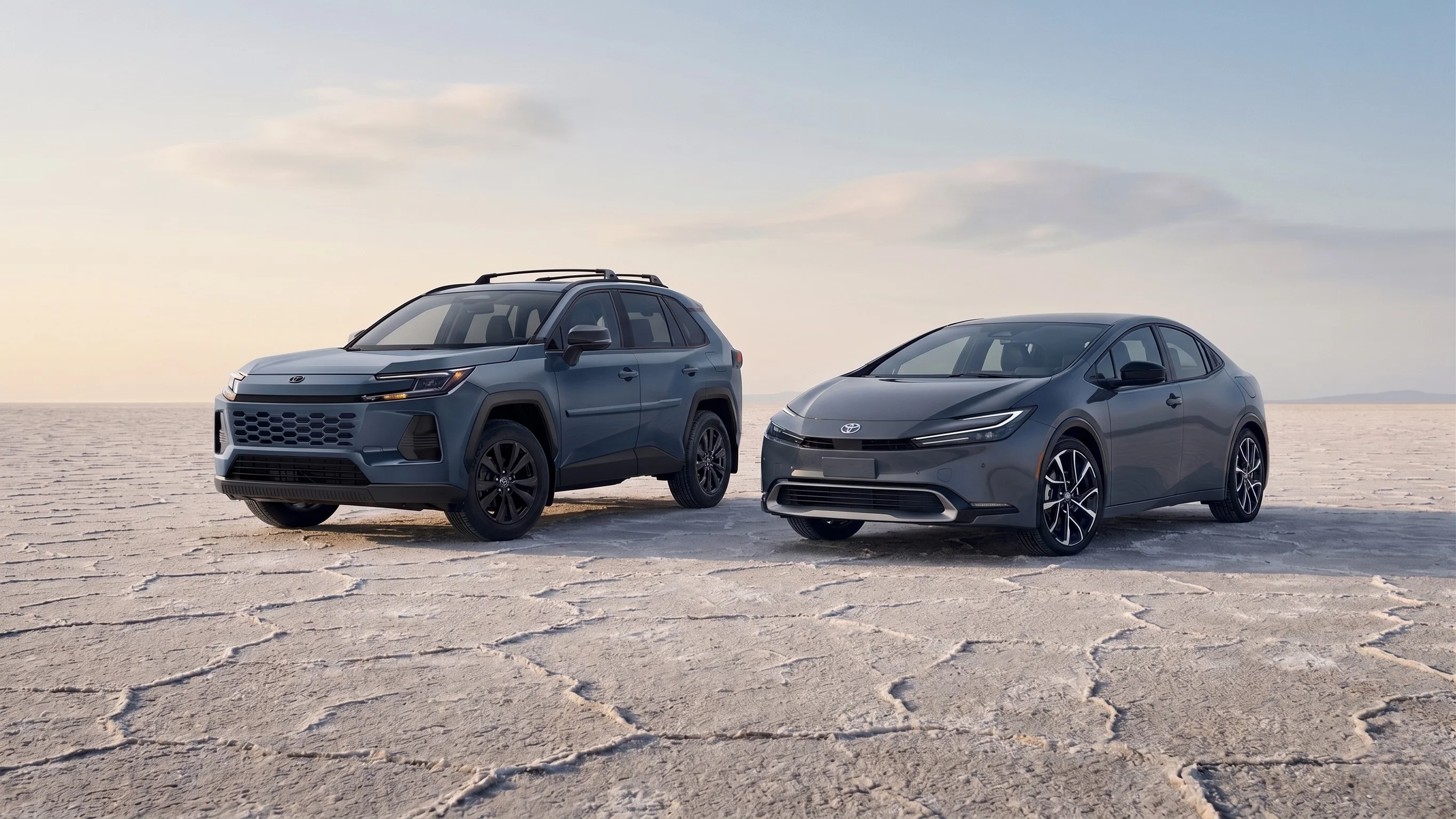
The Three Types of Toyota Electrification at a Glance
A standard hybrid pairs a gasoline engine with an electric motor and charges itself — you never plug it in. A plug-in hybrid adds a larger, home-chargeable battery for a stretch of electric-only driving before it seamlessly becomes a regular hybrid. A battery-electric vehicle drops the gasoline engine entirely and runs purely on electricity.
Standard Hybrid (HEV)
Gas engine plus an electric motor that charges itself through regenerative braking. No plug, no charging logistics.
Plug-In Hybrid (PHEV)
A larger, home-chargeable battery delivers electric-only miles, then runs as a standard hybrid once the charge is used.
All-Electric (BEV)
No gasoline engine at all — pure electric driving, charged at home or at public stations.
| Category | Standard Hybrid (HEV) | Plug-In Hybrid (PHEV) | All-Electric (BEV) |
|---|---|---|---|
| How it’s powered | Gas engine + electric motor | Gas engine + larger battery | Electric motors only |
| Do you plug in? | No — self-charging | Optional (for electric range) | Yes — it’s the only way to refuel |
| Electric-only range | None — self-charging | A dedicated electric range, then hybrid | The vehicle’s full driving range |
| Tailpipe emissions | Reduced | Zero on electric, low on gas | Zero |
| Where it refuels or charges | Any gas station | Gas station + home/public charging | Home or public charging |
| Best for | Hybrid efficiency with zero charging logistics | Short electric commutes plus worry-free long trips | Drivers with home/workplace charging who want all-electric driving |
If you want a deeper one-on-one breakdown, our research library also compares hybrid vs. plug-in hybrid and gas vs. hybrid vehicles directly.
Standard Toyota Hybrids (HEV): Efficiency Without the Plug
A standard Toyota hybrid never needs a charging cable because it manages its own energy through regenerative braking — when you slow or coast, the electric motor acts as a generator, capturing energy that would otherwise be lost and storing it in the hybrid battery to assist acceleration and power low-speed driving. For drivers managing a daily suburban commute, that means real fuel savings with no change in habits and no home charging equipment.
The 2026 Prius is the benchmark here, with a 2.0L four-cylinder paired to Toyota’s latest hybrid system and an electronically controlled CVT (eCVT) across the lineup. Front-wheel drive is standard on every trim, and Electronic On-Demand All-Wheel Drive — which uses a dedicated rear electric motor for added traction in rain or on loose surfaces — is available on any trim. Because these vehicles refuel at any gas station, they’re the easiest step into electrification, and they’re backed by a 60-month/60,000-mile powertrain warranty with none of the plug-in logistics.
Toyota Plug-In Hybrids (PHEV): The Best of Both Worlds
A common question is what happens when a plug-in hybrid runs out of electric charge. The answer is simple: it transitions seamlessly into standard hybrid mode. Once the electric range is used, the gasoline engine engages and the vehicle continues at regular-hybrid efficiency — so you’re never stranded looking for a charger as long as there’s fuel in the tank.
The 2026 Prius Plug-In Hybrid (formerly “Prius Prime”) delivers up to 44 miles of EPA-estimated electric-only range on the SE and an EPA-estimated 127 MPGe, then runs as a 52-mpg-combined hybrid afterward. For SUV shoppers, the redesigned 2026 RAV4 Plug-In Hybrid (formerly “RAV4 Prime”) makes a combined 324 horsepower and travels up to an EPA-estimated 54 miles of electric-only range on the SE. Charge either at home from a standard 120-volt outlet, or add a 240-volt Level 2 setup to refill the battery much faster.
All-Electric Toyota (BEV): The 2026 Toyota bZ
For drivers ready to go fully electric, the 2026 Toyota bZ (formerly the bZ4X) removes the gasoline engine entirely. It offers an EPA-estimated driving range of up to 314 miles on the XLE FWD Plus, and for 2026 it adopts a North American Charging System (NACS) port — opening access to thousands of high-speed public stations. Under ideal conditions, DC fast charging takes the battery from 10% to 80% in about 30 minutes, and an upgraded onboard charger handles home Level 1 and Level 2 charging. Power ranges from 221 horsepower (FWD) to 338 horsepower (AWD). And because there’s no combustion engine, the bZ never needs an oil change.
Efficiency, Range & Charging Compared
Standard hybrids are measured in traditional MPG, while plug-in hybrids and EVs use MPGe (miles-per-gallon-equivalent) and electric range to express their electric efficiency. Here’s how one representative model of each type lines up:
| Metric | 2026 Prius (HEV) | 2026 Prius Plug-In Hybrid (PHEV) | 2026 Toyota bZ (BEV) |
|---|---|---|---|
| Type | Self-charging hybrid | Plug-in hybrid | All-electric |
| Electric-only range | None — self-charging (no plug) | Up to 44 mi (SE) | Full EV — up to 314 mi total range (XLE FWD Plus) |
| EPA efficiency | Up to 57 mpg combined (LE FWD) | 127 MPGe; 52 mpg combined in hybrid mode | Up to 314 mi range (XLE FWD Plus) |
| Charging | No plug — refuels at any gas station | 120V or 240V (Level 2) | 120V/240V + DC fast (NACS); 10–80% in ~30 min |
| Starting TSRP | From ~$29,745 (LE FWD) | From ~$33,775 (SE) | From ~$36,350 (XLE FWD) |
EPA-estimated fuel economy figures are for comparison purposes only. Your actual mileage will vary depending on driving conditions, how you drive and maintain your vehicle, battery age/condition, and other factors.
Charging Levels Explained
There are three main ways to add electricity, and the right one depends on the vehicle:
| Charging Level | Power Source | Typical Use |
|---|---|---|
| Level 1 | Standard 120-volt household outlet | Overnight top-ups for PHEVs |
| Level 2 | 240-volt outlet (like a clothes dryer) | Full overnight charging at home |
| Level 3 (DC fast) | Public DC fast-charging station | EVs like the bZ: 10–80% in about 30 minutes |
Not every plug-in supports every level — the Prius Plug-In Hybrid charges on Level 1 and Level 2, while the all-electric bZ adds Level 3 DC fast charging.
Towing Across the Electrified Lineup
Several electrified Toyotas can tow — from the 2026 RAV4 Hybrid to the i-FORCE MAX Sequoia — and capacity varies meaningfully by configuration:
| Model | Configuration | Max Towing |
|---|---|---|
| 2026 RAV4 Hybrid (HEV) | FWD / base AWD LE | 1,750 lbs |
| 2026 RAV4 Hybrid (HEV) | Other AWD grades | 3,500 lbs |
| 2026 RAV4 Plug-In Hybrid (PHEV) | SE / XSE / Woodland (AWD) | 3,500 lbs |
| 2026 Sequoia (i-FORCE MAX hybrid) | RWD, properly equipped | Up to 9,520 lbs |
Maximum towing and payload capacity figures are based on properly equipped vehicles and vary by configuration. Do not exceed any weight rating. See your owner’s manual and the vehicle’s door-jamb label for specific capacities.
Cost, Value & Warranty
Electrified models often carry a higher starting TSRP than gas-only counterparts, but lower fueling costs and strong warranty coverage reinforce long-term value. Every new Toyota also includes ToyotaCare, which covers factory-scheduled maintenance for 2 years or 25,000 miles, and Toyota backs the hybrid traction battery for 10 years or 150,000 miles. (The all-electric bZ’s EV battery components are covered for 8 years/100,000 miles.) Toyota Safety Sense comes standard across the lineup, with the latest Toyota Safety Sense 4.0 debuting on the redesigned 2026 RAV4. Pricing shifts with mid-cycle updates, so confirm current figures with the dealership.
| Coverage | Duration |
|---|---|
| Basic | 36 months / 36,000 miles |
| Powertrain | 60 months / 60,000 miles |
| Corrosion (sheet-metal perforation) | 60 months / unlimited miles |
| Hybrid & PHEV traction battery | 10 years / 150,000 miles |
| ToyotaCare scheduled maintenance | 2 years / 25,000 miles |
| ToyotaCare 24-hour Roadside Assistance | 2 years / unlimited miles |
TSRP on new inventory covers manufacturer/distributor equipment and logistics fees, all of which are subject to revision. It does not account for taxes, registration, dealer-installed additions, or other local charges. TSRP is not a retail advertisement; actual dealer pricing will vary. The dealer sets the final price.
Maintenance is often simpler than expected. Regenerative braking reduces wear on physical brake pads and rotors, hybrids typically follow a 10,000-mile oil-change interval, and the all-electric bZ skips oil changes entirely.
Common Questions About Toyota Hybrid, PHEV & EV Technology
Can a Toyota Hybrid or PHEV be used for towing?
Yes. The 2026 RAV4 Hybrid tows 1,750 lbs in FWD/base-AWD form and up to 3,500 lbs on other AWD grades, the RAV4 Plug-In Hybrid is rated up to 3,500 lbs, and the i-FORCE MAX hybrid Sequoia tows up to 9,520 lbs when properly equipped (RWD configuration). Capacities vary by configuration — see the disclosures below.
Do I need to install a special charging station for a Prius Plug-In Hybrid?
No. Toyota PHEVs come with a cable that plugs into a standard 120-volt household outlet (Level 1), which is often enough to fully charge overnight. For faster charging, a licensed electrician can install a 240-volt outlet for Level 2.
How long does a Toyota hybrid battery last?
Toyota hybrid batteries are designed to last the life of the vehicle, and Toyota warrants the hybrid traction battery for 10 years or 150,000 miles, whichever comes first — longer than the standard powertrain warranty, reflecting Toyota’s confidence in its hybrid and electric battery technology.
Will my hybrid still work if the electric battery fails?
Toyota hybrids are integrated systems where the electric motor and gasoline engine work in tandem, with multiple failsafes. Complete hybrid-battery failure is rare within the typical lifespan of the vehicle.
Is roadside assistance included?
Every new Toyota includes ToyotaCare 24-hour Roadside Assistance for 2 years and unlimited miles, covering battery jump-starts, tire service, emergency fuel delivery, and towing. Toyota Roadside Assistance can be reached at 1-800-444-4195.
Find Your Electrified Toyota in Temecula
Choosing between a hybrid, plug-in hybrid, and a full EV comes down to your daily mileage, home charging access, and performance preferences. Our team is here to walk you through the differences without pressure. To learn more about the advantages of going electrified, see our overview of the benefits of hybrid and electric vehicles.
Important Disclosures
TSRP on new inventory covers manufacturer/distributor equipment and logistics fees, all of which are subject to revision. It does not account for taxes, registration, dealer-installed additions, or other local charges. TSRP is not a retail advertisement; actual dealer pricing will vary. The dealer sets the final price.
EPA-estimated fuel economy figures are for comparison purposes only. Your actual mileage will vary depending on driving conditions, how you drive and maintain your vehicle, battery age/condition, and other factors.
Maximum towing and payload capacity figures are based on properly equipped vehicles and vary by configuration. Do not exceed any weight rating. See your owner’s manual and the vehicle’s door-jamb label for specific capacities.
0 comment(s) so far on Toyota Hybrid vs. Plug-In Hybrid vs. Electric: How Toyota’s Electrified Vehicles Compare