

How Toyota Plug-In Hybrid Technology Works
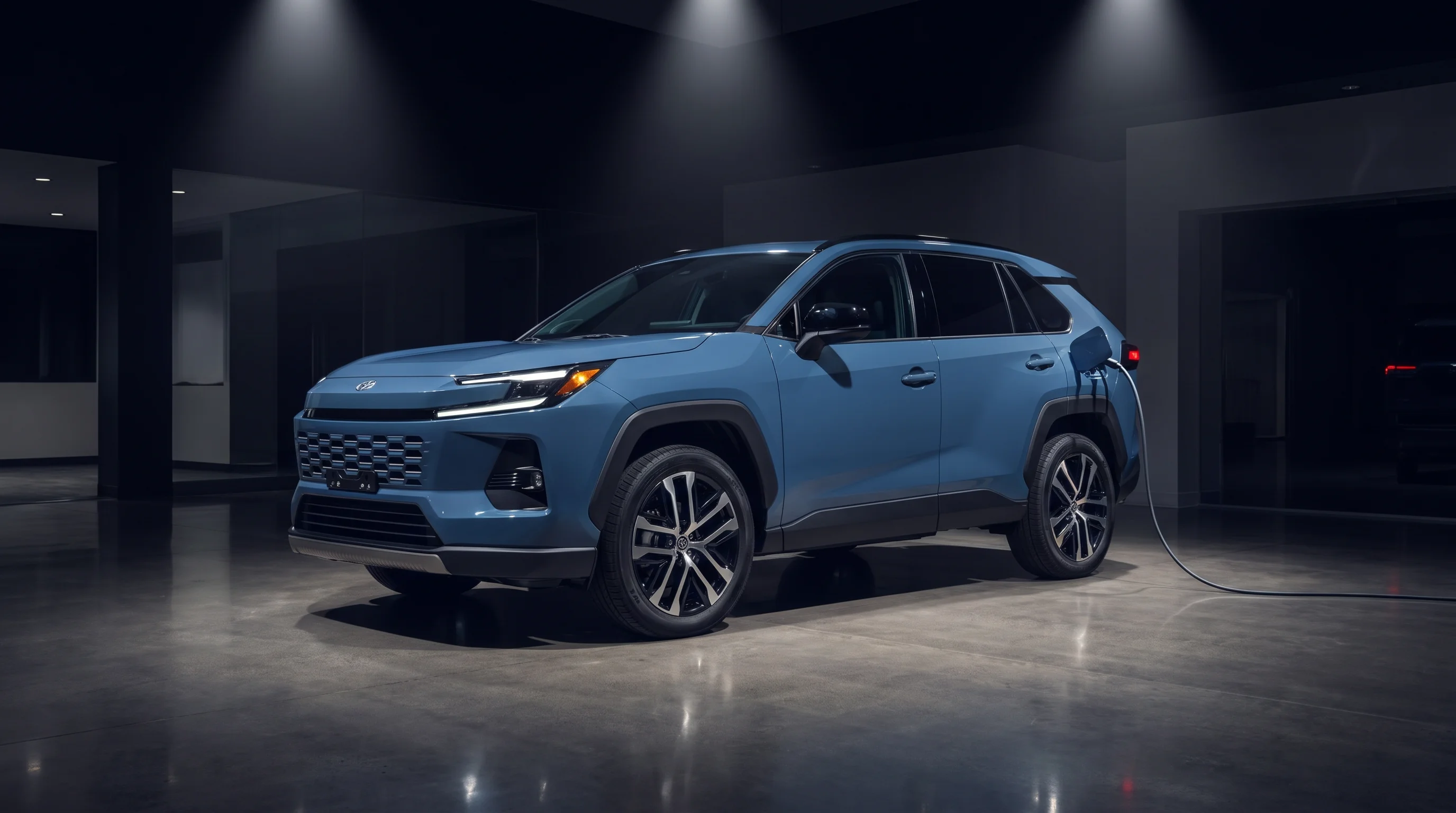
Many drivers want to burn less fuel without giving up long road trips. Toyota plug-in hybrid electric vehicles (PHEVs) solve that problem by pairing a large battery with an efficient gasoline engine. For families in Murrieta and Temecula, a typical day means school drop-offs and local errands. A vehicle that covers those errands on pure electricity is genuinely useful. You drive on battery power, and the vehicle switches to gasoline power on its own when the charge runs low.
At Temecula Valley Toyota, we can help you find the right balance of efficiency and capability. Our showroom is at 26631 Ynez Road in Temecula. Call our team at (951) 319-7911 for quick answers about grades or what is on the lot right now.
Here is the difference that matters. A standard hybrid charges a small battery two ways: through regenerative braking and through the gasoline engine. A plug-in hybrid adds a charge port and a much larger battery. You can plug it in at home overnight and start each morning with a full charge. When the electric range runs out, the vehicle does not stop. It simply runs as a normal hybrid, so fuel economy stays strong and you never need to find a charger on a long trip.
What Is Inside a Toyota Plug-In Hybrid
To see how these vehicles reach their efficiency figures, look at the hardware. A Toyota PHEV powertrain has four main parts. There is a gasoline engine, a large lithium-ion traction battery, a power control unit, and a pair of high-output electric motor-generators. Together they shift the workload between gas and electric power, depending on your speed and how much charge is left. InsideEVs walks through how the two motor-generators and the gear set divide the work.
The battery is what separates a plug-in hybrid from a standard hybrid. A regular hybrid carries a small pack that exists only to buffer energy. A plug-in hybrid carries one large enough to move the car on its own for a real commute, which is why it needs an external charge port and an onboard charger to fill it.
The Two Toyota Plug-In Hybrids Sold Today
Everything in this guide applies to both of them. The Prius Plug-in Hybrid is a compact hatchback built around a 2.0-liter four-cylinder engine, a 13.6-kWh lithium-ion battery and front-wheel drive, and it produces 220 net-combined horsepower. The RAV4 Plug-in Hybrid is an SUV built around a 2.5-liter four-cylinder engine, a 22.7-kWh traction battery and standard all-wheel drive, and it produces 324 net combined horsepower. Depending on grade, a Prius Plug-in Hybrid covers an EPA-estimated 39 to 44 miles on a full charge before the gasoline engine takes over. Figures per Toyota’s Prius Plug-in Hybrid announcement, Toyota’s 2026 Prius Plug-in Hybrid specifications and Toyota’s 2026 RAV4 announcement.
EPA-estimated fuel economy figures are for comparison purposes only. Your actual mileage will vary depending on driving conditions, how you drive and maintain your vehicle, battery age/condition, and other factors.
How the Planetary Power Split Device Replaces a Multi-Speed Transmission
Shoppers often ask if Toyota plug-in hybrids use a normal multi-speed automatic. They do not. A normal gearbox has clutches and a set of gears that shift up and down. Toyota PHEVs use an eCVT instead, short for electronically controlled continuously variable transmission. At its center sits a tough mechanical part called the planetary power split device. Jalopnik covers why an eCVT is not a conventional CVT despite the shared name.
What the Power Split Device Does
The power split device uses a planetary gear set to blend power from the engine and the motor-generators. It links the engine, the motors, and the drive wheels. Yet it still lets each one spin at its own speed. The system changes the speed of the motor-generators to alter the effective gear ratio, and no gear ever physically shifts, which is why you feel no shift shock and no hunting for gears. InsideEVs explains the sun, planet, and ring gear arrangement in more technical detail.
Why It Has So Few Wear Parts
Because there are no belts, pulleys, or friction bands to wear out, very few parts wear at all. As Jalopnik notes in its eCVT explainer, the belt-and-pulley hardware that defines a conventional CVT simply is not there. The system also finds the best operating point for the engine. It holds the engine there for fuel economy while the electric motors supply instant torque. That simple design is a big reason Toyota hybrids have earned their name for reliability.
EV Mode, Auto EV/HV Mode and HV Mode
Getting the most from a plug-in hybrid starts with the drive modes. Start a trip on a full battery in EV Mode and the vehicle runs on electric power alone. No gas is used, and there are no tailpipe emissions. This is not a low-speed-only trick either. In one instrumented test by Edmunds, a Prius Plug-in Hybrid reached 84 mph on battery alone, so highway driving without gas is well within reach.
The Three Selectable Drive Modes
| Drive mode | Power source | What it is for |
|---|---|---|
| EV Mode | Battery only | Electric-only driving with no gasoline used and no tailpipe emissions |
| Auto EV/HV Mode | Battery, with gasoline assist on demand | Draws mainly on the battery and calls on the engine when more power is needed, such as hard acceleration |
| HV Mode | Gasoline and electric blended | Runs as a conventional hybrid, which lets you save battery charge for later in a trip |
Mode behavior per Toyota’s 2026 Prius Plug-in Hybrid specifications and U.S. News road-test observations.
How the Handoff Works
Once battery charge drops to a set point, the system moves to hybrid operation. Now the vehicle acts like a standard Toyota hybrid, blending gas and electric power for the best fuel economy. The handoff is smooth, and most drivers barely notice the engine start, a behavior U.S. News observed in road testing. Regenerative braking also contributes, capturing energy as you slow down and converting it back into electricity to help hold the charge.
Your fuel savings come from staying in electric driving as much as you can. Many owners go weeks between gas stops when their daily miles fit inside the electric range.
How a Plug-In Hybrid’s Efficiency Is Measured
A plug-in hybrid carries two efficiency ratings, not one. The EPA window sticker shows them side by side. The left box covers driving on electricity and uses MPGe, short for miles per gallon of gasoline equivalent. The right box covers driving on gasoline, once the battery is used up, and it uses ordinary MPG. The EPA explains both boxes on its plug-in hybrid label guide.
MPGe exists because you do not buy electricity by the gallon. The EPA treats 33.7 kilowatt-hours as the energy equal of one gallon of gas, then measures how far a vehicle travels on that much energy. The figure also accounts for charging losses, because charging is never perfectly efficient. EPA testing documentation covers the formula.
Here is why it matters. Judging a plug-in hybrid on its gasoline MPG alone only describes what happens after you stop plugging it in. The MPGe figure describes the driving most plug-in owners actually do. Our comparison of Toyota hybrid, plug-in hybrid and electric models lays those ratings out side by side across the electrified lineup.
How Charging a Plug-In Hybrid Works
A plug-in hybrid does not need special equipment to charge. Every Toyota plug-in hybrid ships with a dual-voltage cable that handles both 120-volt and 240-volt home charging, so the entry point is whatever outlet you already have in the garage.
The Three Charging Levels
| Charging level | What you need | How it works in practice |
|---|---|---|
| Level 1 (120V) | A standard household outlet and the included dual-voltage cable | The slowest option and often enough overnight. A Prius Plug-in Hybrid fills in about 11 hours |
| Level 2 (240V) | A 240-volt home charger or a public Level 2 station | The practical home setup for a full battery every morning. A Prius Plug-in Hybrid fills in about 4 hours |
| DC fast charging | A public DC fast charger, plus a vehicle built to accept one | Rare on plug-in hybrids. Where it is offered, 10% to 80% takes about 30 minutes under ideal conditions |
Charging times are estimates and vary with temperature and other conditions. Times per CarsDirect specifications and Toyota’s electrified vehicle charging guide.
Why DC Fast Charging Is New Territory for Plug-In Hybrids
Most plug-in hybrids support Level 1 and Level 2 only, and there is a sound engineering reason for it. A PHEV battery is small enough that an overnight charge covers it, and when the battery does run down the gasoline engine simply takes over, so there is no stranded-driver problem to solve. Adding fast-charging hardware means added cost and complexity for a benefit most owners would rarely use.
Toyota broke from that pattern on the 2026 RAV4 Plug-in Hybrid, where two grades add a CCS1 port and DC fast-charging capability. Those grades can move from 10% to 80% charge in roughly 30 minutes on a compatible charger, which turns a plug-in hybrid into something you can usefully top up mid-trip rather than only overnight. Details per Toyota’s 2026 RAV4 announcement.
Common Questions About Toyota Plug-In Hybrids
Can a standard hybrid be converted into a plug-in hybrid?
No. A plug-in hybrid is built around its own charging hardware. That includes a charge port, an onboard charger, and a much larger battery pack with its own management and packaging needs. A standard hybrid is not built with any of it. If you want real electric-only driving, buy a plug-in hybrid model.
Do Toyota plug-in hybrids still need oil changes?
Yes. A Toyota PHEV still has a gasoline engine. Oil changes, tire rotations, and fluid checks stay part of ownership. The intervals are not the same as a gas-only car, though, so follow the maintenance schedule in your owner’s manual rather than a general rule of thumb. Regenerative braking also cuts wear on brake pads and rotors, one reason Toyota hybrid drivetrains see relatively few repairs. Routine service keeps the engine ready for the times the vehicle runs in hybrid mode.
The information in this article is general guidance and does not constitute a specific diagnostic or repair recommendation for any individual vehicle. Repair and maintenance decisions should be made in consultation with a certified technician based on the specific condition of your vehicle.
What maintenance coverage comes with a new Toyota plug-in hybrid?
For the 2026 model year, every new Toyota plug-in hybrid comes with ToyotaCare. This no-cost plan covers factory-scheduled service for two years or 25,000 miles, whichever comes first. Roadside Assistance runs longer on a plug-in hybrid than on most Toyotas: three years with unlimited mileage, rather than the two years that applies to the rest of the lineup. Terms differ by model year, so check the terms on the exact vehicle you are looking at. See Toyota’s maintenance plan details for current program terms.
This information is provided for general educational purposes only and does not constitute legal advice. Warranty coverage depends on the specific terms of your vehicle’s warranty agreement. Consult your owner’s manual or a qualified legal professional for guidance on your individual situation.
What happens if I cannot plug in my Toyota PHEV?
It keeps running as an efficient standard hybrid. As Edmunds puts it, once the all-electric range is used up the vehicle operates like its regular hybrid counterpart. The system uses the gasoline engine and regenerative braking to manage the charge. There is no range anxiety, and a skipped charge will not strand you.
Can I charge a plug-in hybrid from a standard household outlet?
Yes. Every Toyota plug-in hybrid includes a charging cable that fits a standard 120-volt three-prong outlet. Charging this way is slower than a dedicated 240-volt station, but it works well overnight at home and requires no special installation. See Toyota’s electrified vehicle charging guide for details.
Does cold weather affect electric driving range?
It can. Like all electrified vehicles, plug-in hybrids may temporarily lose some electric range in cold weather, driven by battery chemistry and the energy used to heat the cabin. AAA’s 2026 temperature study identifies those same two factors. Range comes back as temperatures rise.
How does Toyota Roadside Assistance support plug-in hybrid owners?
If something goes wrong on the road, call Toyota Roadside Assistance at 1-800-444-4195. Support comes at no cost under your vehicle’s coverage. The program covers towing to an authorized Toyota dealership within a 25-mile limit, flat tire changes using your inflated spare, and emergency fuel delivery. Program terms are published with Toyota’s maintenance plan details.
Is the high-voltage hybrid battery covered separately?
Yes. Toyota hybrid, plug-in hybrid, fuel cell, and battery electric vehicles from the 2020 model year onward carry 10-year coverage on the hybrid battery. The term runs 10 years from the date of first use or 150,000 miles, whichever comes first. Coverage also transfers to later owners for the rest of the term. Other hybrid-related components, including the battery control module, hybrid control module, and inverter with converter, are covered for eight years or 100,000 miles. Terms per Toyota’s 2026 warranty information.
This information is provided for general educational purposes only and does not constitute legal advice. Warranty coverage depends on the specific terms of your vehicle’s warranty agreement. Consult your owner’s manual or a qualified legal professional for guidance on your individual situation.
Explore Electrified Toyota Models at Temecula Valley Toyota
A plug-in hybrid lets you move toward electric driving without changing your habits. You also do not have to plan your week around chargers. Whether your route runs through Temecula, Murrieta, Menifee, Wildomar, or Lake Elsinore, a PHEV covers local trips on battery power and long trips on gas.
Take a look at our electrified Toyota lineup to see the hybrid and plug-in hybrid models we carry. Driving one is the best way to feel how smoothly the system works. Call us at (951) 319-7911 when you are ready to set up a test drive.
0 comment(s) so far on How Toyota Plug-In Hybrid Technology Works