

The Best Toyota Hybrid for Your I-15 Commute to San Diego
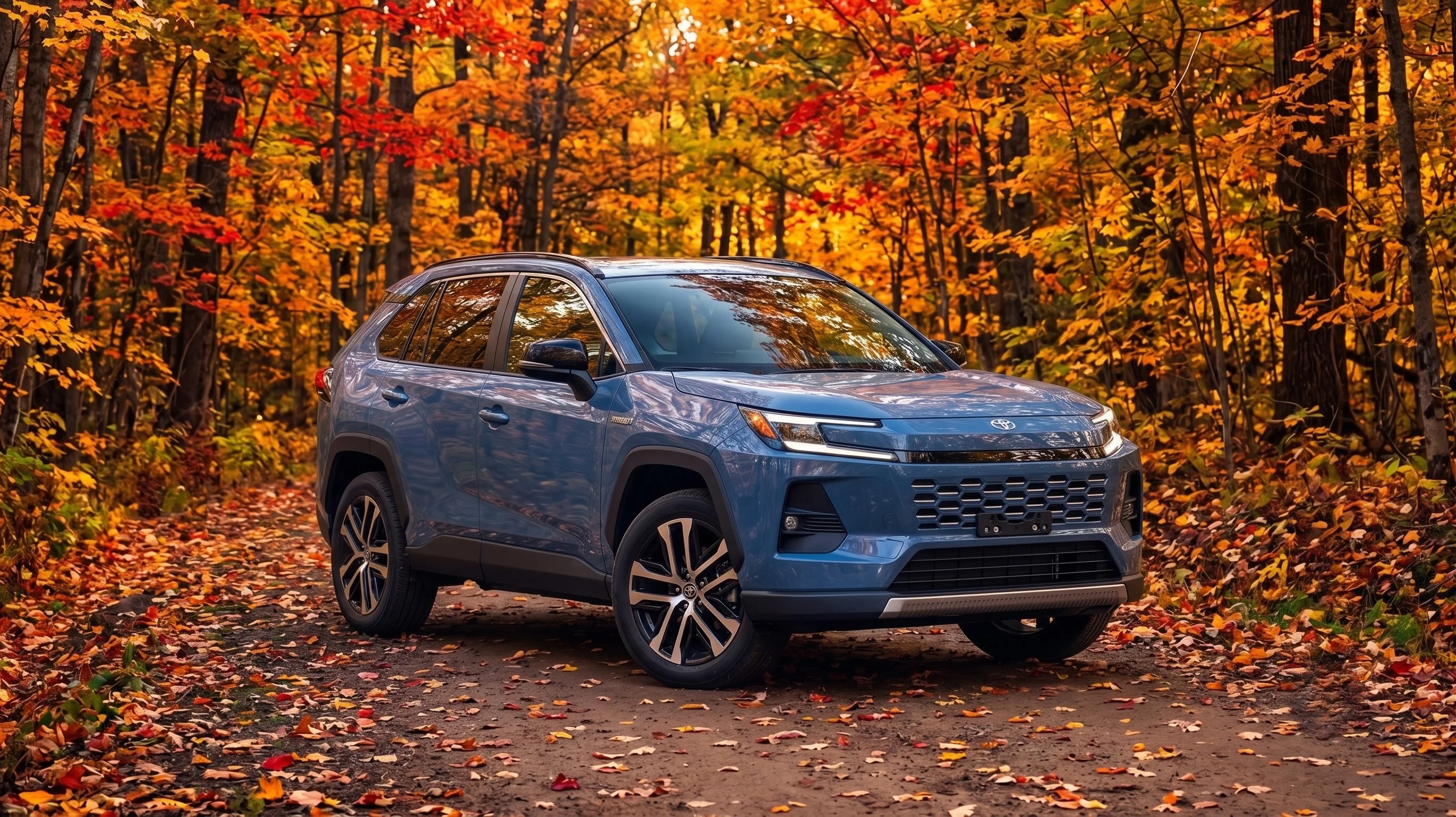
The daily run down Interstate 15 rewards a specific kind of vehicle: one that sips fuel on long freeway pulls, stays composed through elevation changes, and shrugs off stop-and-go backups without punishing you at the pump. Toyota’s 2026 hybrid lineup gives Temecula Valley and San Diego commuters several strong options — from the ultra-efficient Prius to the spacious RAV4 Hybrid — but for most drivers logging serious I-15 miles from Murrieta, Menifee, Lake Elsinore, or Fallbrook, the 2026 Camry Hybrid is the standout commuter pick. At Temecula Valley Toyota, we help you match the right hybrid to the way you actually drive.
How the 2026 Toyota Hybrid Lineup Compares
Before we dig into why the Camry earns the commuter crown, here is how the most commute-friendly 2026 Toyota hybrids stack up on efficiency. Each is a strong I-15 companion — the right one depends on how much space you need and how you like to drive.
| Model | Type | Up to EPA-Estimated Combined MPG |
|---|---|---|
| Prius | Compact hatchback | 57 |
| Corolla Hybrid | Compact sedan | 50 |
| Camry Hybrid | Midsize sedan | 51 |
| Corolla Cross Hybrid | Subcompact SUV | 42 |
| RAV4 Hybrid | Compact SUV | 44 |
A few quick takeaways for the commute:
- Maximum efficiency: the Prius leads outright, and the Corolla Hybrid is a strong pick if you want a traditional compact sedan. Not sure which body style fits? Our Corolla vs. Corolla Cross comparison breaks down the differences.
- Best all-around commuter: the Camry Hybrid pairs near-Prius efficiency with a roomy midsize cabin and available all-wheel drive — the balance most I-15 drivers want. See the full breakdown in our 2026 Camry overview.
- Need cargo space: the RAV4 Hybrid and Corolla Cross Hybrid trade a little efficiency for SUV versatility. Learn more in our 2026 RAV4 overview.
Beyond these commuter favorites, Toyota’s 2026 electrified range also includes the Prius Plug-in Hybrid, RAV4 Plug-in Hybrid, Highlander and Grand Highlander Hybrid, Crown and Crown Signia, Sienna, and the i-FORCE MAX Tacoma, Tundra, and 4Runner — worth a look if you need three rows, towing capability, or plug-in electric range. You can see everything currently available in our electrified and hybrid lineup. The rest of this guide focuses on the Camry Hybrid, our top commuter pick.
EPA-estimated fuel economy figures are for comparison purposes only. Your actual mileage will vary depending on driving conditions, how you drive and maintain your vehicle, battery age/condition, and other factors.
Does All-Wheel Drive Actually Lower Your Highway MPG?
It is the most common question we hear from freeway commuters, and the honest answer surprises people: on most Camry trims, all-wheel drive costs you almost nothing in efficiency.
Toyota’s Electronic On-Demand AWD does not use a heavy mechanical driveshaft running the length of the car. Instead, it adds a dedicated rear electric motor that engages only when the front wheels need help — which means the usual highway fuel penalty of traditional AWD largely disappears. Here is how the EPA-estimated combined figures actually break down:
| Trim | EPA-Estimated Combined MPG (FWD) | EPA-Estimated Combined MPG (AWD) |
|---|---|---|
| LE | 51 | 50 |
| SE | 46 | 46 |
| Nightshade | 46 | 46 |
| XLE | 46 | 46 |
| XSE | 46 | 43 |
The takeaway for your I-15 commute: on the efficiency-leading LE, choosing AWD drops you a single mpg combined — 51 to 50. On the SE, Nightshade, and XLE, the combined rating does not change at all. Only the sport-focused XSE sees a meaningful step down with AWD. If your drive is almost all paved freeway, front-wheel drive maximizes range. If you want extra traction for wet winter mornings or the occasional trip off the interstate, AWD is a genuinely low-cost upgrade on most trims.
EPA-estimated fuel economy figures are for comparison purposes only. Your actual mileage will vary depending on driving conditions, how you drive and maintain your vehicle, battery age/condition, and other factors.
What the Camry Hybrid Puts Under the Hood
Every 2026 Camry runs the same fifth-generation Toyota hybrid system, so the fundamentals do not change as you move up the lineup — only the styling, wheels, and features do. The powertrain at a glance:
| Spec | Detail |
|---|---|
| Engine | 2.5L four-cylinder hybrid |
| Horsepower | 225 hp (FWD) / 232 hp (AWD) |
| Torque | 163 lb-ft |
| Transmission | eCVT |
| Drivetrain | Front-wheel drive standard; Electronic On-Demand AWD available on every trim |
That AWD version is not just about traction — the added rear motor bumps net combined output to 232 horsepower, useful for confident merging into fast-moving I-15 traffic.
How Traffic and Inland Heat Affect the Hybrid Battery
Stop-and-go congestion is where a hybrid shows off. Where a conventional car simply burns fuel idling in a backup, the Camry recovers energy through regenerative braking and feeds it back to the lithium-ion battery, then runs on electric power during low-speed crawling. Heavy I-15 traffic actually plays to the powertrain’s strengths.
Summer heat in the Inland Empire is the real variable. High ambient temperatures add thermal stress to any battery, which is why the Camry’s hybrid system uses active battery temperature management to keep the pack in its ideal range. A few habits help it do its job:
- Keep the battery’s cooling intake unobstructed — avoid blocking interior vents with cargo
- Park in shade during peak summer heat when you can
- Stay current on hybrid system checks so cooling components keep working as designed
For drivers in Murrieta and Winchester, where summer temperatures climb into the triple digits, a healthy cooling path is the simplest way to protect long-term battery life. Considering an upgrade? You can value your trade-in online to see what equity you can put toward a hybrid.
Brakes, Longevity, and Real-World Ownership Cost
Beyond fuel savings, a hybrid can quietly lower the cost of routine wear over a high-mileage commuting life. Two parts of the Camry’s design do most of that work:
Longer brake life
Because regenerative braking handles most deceleration — the friction pads often engage only in the final few mph of a stop — hybrid brake pads typically last much longer than those on a comparable gas car. On a freeway-heavy I-15 commute, where you are coasting and regen-braking more than hard-stopping, that adds up to real money saved on a routine wear item.
Fewer transmission wear points
The hybrid’s power-split transmission uses a planetary gearset rather than the belts and clutches of a conventional automatic, eliminating common failure points that tend to show up as the miles climb.
Put together, these are the kinds of durability details that make a Toyota hybrid inexpensive to live with over the long haul. Want to see the full range of efficient commuters? You can browse our new vehicle inventory online.
Battery Warranty and Long-Term Peace of Mind
The most common long-term worry with any hybrid is the battery — and it is largely answered by the warranty. Toyota’s coverage on the 2026 Camry is among the strongest in the segment:
| Coverage | Term |
|---|---|
| Hybrid battery | 10 years / 150,000 miles |
| Hybrid components (battery control module, hybrid control module, inverter with converter) | 8 years / 100,000 miles |
| ToyotaCare scheduled maintenance | 2 years / 25,000 miles |
| ToyotaCare roadside assistance | 2 years / unlimited miles |
Modern Toyota hybrid batteries are engineered to last the life of the vehicle, and if an out-of-warranty replacement is ever needed, real-world costs vary widely by model, battery type, and where the work is done. For most owners, the manufacturer coverage above spans the highest-mileage years of a daily I-15 commute.
Warranty coverage depends on the specific terms of your vehicle’s warranty agreement. Coverage terms, limitations, and exclusions are set by Toyota; see the official Toyota new-vehicle warranty and your Warranty and Maintenance Guide for complete details.
Buying Along the I-15 Corridor
Every new hybrid we sell includes ToyotaCare, so your first two years of factory-scheduled maintenance and roadside assistance are covered from day one. When you are ready to talk numbers, you can apply for financing online to save time before you visit. Whether you are commuting from Fallbrook, Lake Elsinore, or all the way down I-15 to San Diego, the goal is the same: match the right Camry to your daily miles.
Quick Answers Before You Visit
Does the Toyota hybrid battery charge itself, or do I need to plug it in?
The standard Camry hybrid is entirely self-charging — it never plugs in. It uses regenerative braking and the gas engine to keep the battery charged as you drive.
What happens if the hybrid battery has a fault on the freeway?
The Camry is designed with redundancy. If the hybrid battery experiences a problem, the vehicle can typically continue on gas-engine power so you can safely exit the freeway and get it serviced.
Are hybrids more expensive to insure than gas models?
Insurance depends on vehicle value, safety ratings, and your own driving history. Because the Camry carries a comprehensive standard safety suite and strong safety ratings, hybrid insurance costs are generally comparable to gas-only equivalents.
How is the eCVT different from a regular CVT?
Instead of the belts and pulleys of a conventional CVT, Toyota’s electronically controlled transmission uses a durable planetary gearset. That design removes common wear points and delivers smooth, consistent power.
Find Your Next Fuel-Efficient Commuter at Temecula Valley Toyota
The right hybrid comes down to how you actually drive — freeway-heavy or mixed, FWD or AWD, efficiency-first or feature-loaded. Our team is here to help you sort it out and take a test drive at 26631 Ynez Road in Temecula. Prefer to confirm availability or ask a question first? Reach out any time.
Disclaimers
EPA-estimated fuel economy figures are for comparison purposes only. Your actual mileage will vary depending on driving conditions, how you drive and maintain your vehicle, battery age/condition, and other factors.
Warranty coverage depends on the specific terms of your vehicle’s warranty agreement. Coverage terms, limitations, and exclusions are set by Toyota; see the official Toyota new-vehicle warranty and your Warranty and Maintenance Guide for complete details.
0 comment(s) so far on The Best Toyota Hybrid for Your I-15 Commute to San Diego