

Toyota Hybrid 101 for SoCal Commuters: What You Actually Save (and What You Don’t)
Southern California commuters face a unique daily reality — stop-and-go congestion on the I-15, suburban surface street crawls through Temecula and Murrieta, and weekend highway stretches toward Fallbrook or Lake Elsinore. These driving patterns happen to be exactly where hybrid vehicles shine brightest, and where conventional gas engines waste the most fuel.
But how much do you actually save with a hybrid? And what are the real ownership trade-offs? Here’s an honest breakdown for drivers in the Temecula Valley and surrounding Inland Empire communities.
Hybrid vs. Gas: What the Fuel Savings Actually Look Like
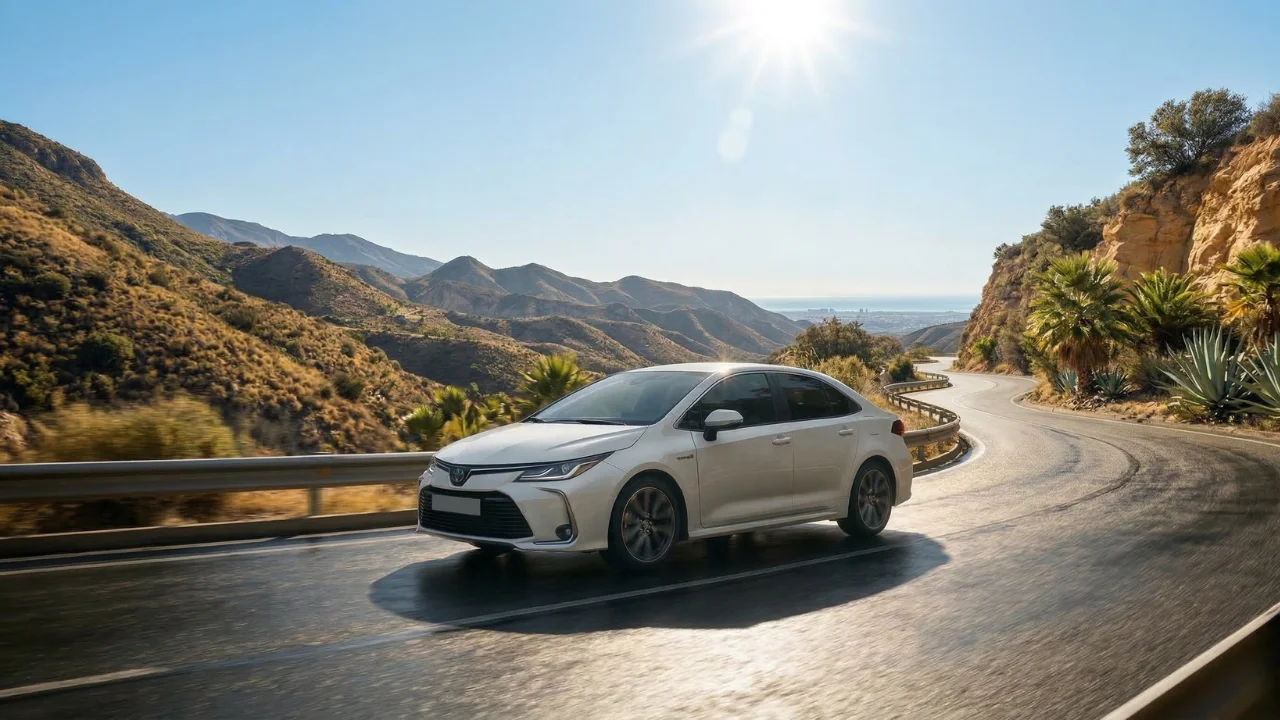
The math behind hybrid savings is straightforward, but the numbers are more impressive than most drivers expect. A conventional midsize sedan averaging 30 mpg costs roughly $2,000 per year in fuel at Southern California gas prices, assuming 12,000 miles annually and around $5.00 per gallon. A comparable Toyota hybrid — like the Camry Hybrid at up to 51 mpg combined or the Corolla Hybrid — cuts that roughly in half.
Over five years, that gap adds up to $4,000–$5,000 in fuel savings alone, depending on your specific model and driving patterns. Drivers who spend significant time in stop-and-go traffic on the I-15 corridor between Temecula and Menifee or Winchester may see even greater savings, because hybrids actually gain efficiency in slow traffic — the opposite of conventional engines.
The key factor is regenerative braking. Every time you slow down or brake, the electric motor recaptures energy and stores it in the hybrid battery. In heavy traffic with frequent stops, this system is constantly recovering energy that a gas-only vehicle simply loses as heat through the brake pads. That’s why hybrid drivers in congested suburban areas often match or exceed their EPA estimates — a rarity in the automotive world.
Why Hybrids Are Built for SoCal Traffic Patterns
Southern California traffic is frustrating for drivers but surprisingly ideal for hybrid powertrains. The combination of frequent acceleration and deceleration, moderate cruising speeds, and mild Mediterranean climate creates near-perfect hybrid operating conditions.
At lower speeds and during stop-and-go driving — common on suburban roads through Murrieta, Wildomar, and Canyon Lake — Toyota hybrids can operate primarily on electric power, using little to no gasoline. On highway stretches, the gasoline engine takes over efficiently, and the seamless transition between power sources happens without driver intervention.
The mild Temecula Valley climate also helps. Extreme cold and extreme heat both reduce hybrid battery efficiency and increase climate control energy demands. Southern California’s moderate temperatures mean less strain on the system year-round, contributing to real-world fuel economy that stays close to EPA estimates.
Toyota’s current hybrid lineup offers options across vehicle types: the Camry Hybrid for midsize sedan buyers (up to 51 mpg combined), the Corolla Hybrid for compact efficiency, the RAV4 Hybrid for families who need SUV space, and the Prius as the original hybrid benchmark. Each uses Toyota’s proven hybrid system with regenerative braking, and each benefits from the same SoCal traffic dynamics.
For drivers interested in understanding the technology behind these systems, Temecula Valley Toyota has a helpful breakdown of how hybrid cars work.
Hybrid Maintenance: What Costs Less (and What Doesn’t Change)
One of the biggest questions prospective hybrid owners have is whether maintenance costs offset fuel savings. The short answer: hybrid maintenance is generally cheaper than conventional vehicles for the components that wear fastest, and comparable for everything else.
Where Hybrids Save on Maintenance
Brake pads are where hybrids save the most. Because regenerative braking handles much of the deceleration, the physical brake pads see significantly less wear. Conventional brake pads typically last 30,000–70,000 miles. On Toyota hybrids, owners frequently report brake pads lasting well beyond 100,000 miles — some reaching 150,000 miles before replacement. For commuters in stop-and-go traffic around Menifee or Sun City, that could mean skipping two or three brake jobs over the life of the vehicle.
What Stays the Same
Oil changes, tires, and routine maintenance remain essentially the same as conventional vehicles. Hybrids still have gasoline engines that need oil changes, air filters, and standard fluid maintenance on the same intervals. These costs are unchanged — hybrids save you money at the brake shop, not at the oil change counter.
The Hybrid Battery: Less Worry Than You Think
The hybrid battery is the component that draws the most concern — and the one that rarely causes problems. Toyota backs its hybrid batteries with a 10-year / 150,000-mile warranty, reflecting confidence built over more than two decades of hybrid production. Real-world longevity often exceeds the warranty period in Southern California’s mild climate, which puts less thermal stress on battery chemistry than extreme heat or cold environments.
If a hybrid battery does eventually need replacement outside of warranty, costs typically range from $2,000 to $4,000 — a meaningful expense, but one that’s generally offset by years of accumulated fuel and brake savings by that point in the vehicle’s life.
A common question is whether hybrids need to be plugged in. Standard hybrids like the Camry Hybrid and Corolla Hybrid do not — they charge themselves through driving and regenerative braking. For more on this, see do hybrid cars need to be charged.
What Hybrids Don’t Save You On
Honesty matters: hybrids are not a magic solution for every cost. The purchase price of a hybrid is typically higher than its gas-only counterpart — though Toyota has narrowed this gap significantly, and the 2026 Camry is now exclusively hybrid with no gas-only option to compare against.
Insurance premiums for hybrids are generally comparable to their conventional equivalents, and tire costs are identical. Hybrids also don’t eliminate trips to the gas station — they reduce them. Drivers expecting a fully electric experience will need to look at plug-in hybrids or battery electric vehicles instead.
The strongest case for a hybrid is a driver who racks up miles in mixed city-highway conditions — exactly the driving pattern typical of Temecula Valley commuters traveling between Winchester, Murrieta, Fallbrook, and surrounding communities.
Explore Toyota Hybrids at Temecula Valley Toyota
Temecula Valley Toyota carries Toyota’s full hybrid lineup and can help you understand which model fits your commute and budget. Whether you’re considering your first hybrid or upgrading from an older model, our team can walk you through real-world ownership costs specific to your driving patterns.
Call our sales team at (951) 319-7911 to schedule a test drive. Visit us at 26631 Ynez Road, Temecula, CA 92591 — conveniently located for drivers from Murrieta, Menifee, Fallbrook, Canyon Lake, Wildomar, Winchester, Sun City, and Lake Elsinore.
0 comment(s) so far on Toyota Hybrid 101 for SoCal Commuters: What You Actually Save (and What You Don’t)