

Toyota Tacoma Oil Type and Capacity: A 2010–2026 Guide
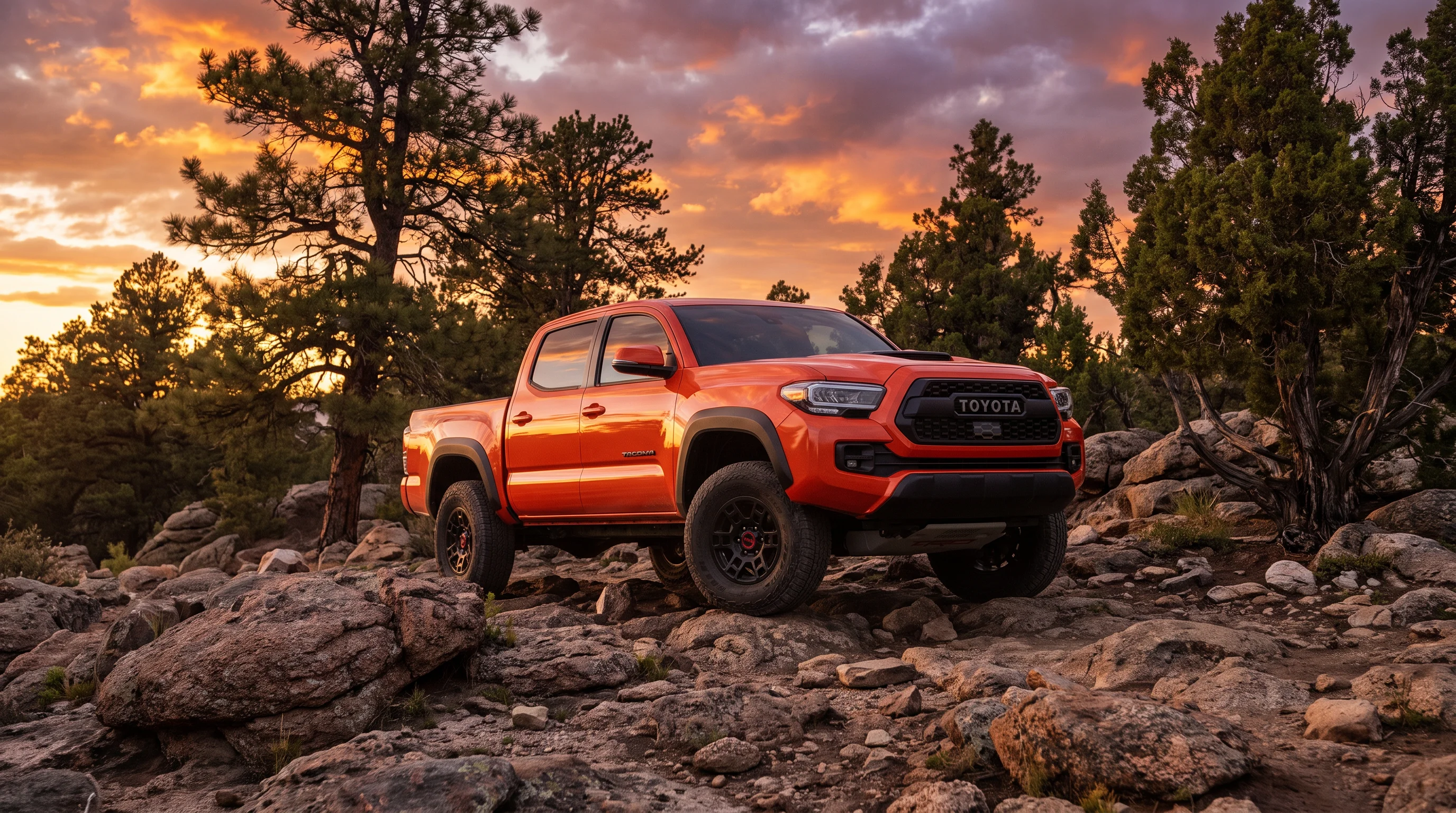
The right engine oil for your Toyota Tacoma depends on two things: which generation you own and which engine is under the hood. A 2012 V6 and a 2025 turbo four take different viscosities and different amounts of oil. Using the wrong one costs you protection, efficiency, or both. Here is the full breakdown from the second generation through the current model year. You’ll also find the filter part numbers and service intervals that go with each engine.
Toyota Tacoma Oil Type and Capacity by Generation
Find your model year and engine, then match the viscosity, fill capacity, and interval. Always confirm the final level on the dipstick with the truck on level ground.
| Model Years | Engine | Oil Viscosity | Capacity (with filter) | Oil Filter | Normal Interval |
|---|---|---|---|---|---|
| 2010–2015 (2nd Gen) | 4.0L V6 (1GR-FE) | SAE 5W-30 | 5.5 qt (4.8 qt on RWD base) | 90915-YZZD3 (spin-on) | 5,000 mi / 6 months |
| 2010–2015 (2nd Gen) | 2.7L I4 (2TR-FE) | SAE 0W-20 | 5.5 qt | 90915-YZZD3 (spin-on) | 10,000 mi / 12 mo on 0W-20; otherwise 5,000 mi / 6 mo |
| 2016–2023 (3rd Gen) | 3.5L V6 (2GR-FKS) | SAE 0W-20 | 6.1–6.2 qt | 04152-YZZA1 (cartridge) | 10,000 mi / 12 months |
| 2016–2023 (3rd Gen) | 2.7L I4 (2TR-FE) | SAE 0W-20 | 6.2 qt | 90915-YZZD3 (spin-on) | 10,000 mi / 12 months |
| 2024–2026 (4th Gen) | 2.4L Turbo i-FORCE (T24A-FTS) | SAE 0W-20 (ILSAC GF-6A) | 5.9 qt | 90915-YZZN1 (spin-on) | 10,000 mi / 12 months |
| 2024–2026 (4th Gen) | 2.4L Turbo i-FORCE MAX Hybrid | SAE 0W-20 (ILSAC GF-6A) | 5.9 qt | 90915-YZZN1 (spin-on) | 10,000 mi / 12 months |
The information in this article is general guidance and does not constitute a specific diagnostic or repair recommendation for any individual vehicle. Repair and maintenance decisions should be made in consultation with a certified technician based on the specific condition of your vehicle.
What Oil Type and Capacity Does a 2010–2015 (2nd Gen) Tacoma Need?
Oil Type and Fill Capacity
Second-generation Tacomas split by engine. Trucks with the 4.0L V6 1GR-FE take 5.5 quarts of SAE 5W-30 with a filter change — rear-wheel-drive base models take 4.8 quarts. Trucks with the 2.7L four-cylinder 2TR-FE take 5.5 quarts of SAE 0W-20.
Matching viscosity and volume to the exact powertrain protects valve train components and keeps the engine cooling properly. Toyota’s owner’s manual specifies 5W-30 for the 4.0L V6 and 0W-20 for the 2.7L four. If 0W-20 isn’t available for the four-cylinder, 5W-20 can be used as a temporary substitute. It must be replaced with 0W-20 at the next service. A full synthetic formula gives the V6 stronger resistance to thermal breakdown when hauling heavy payloads or pulling a trailer up long grades. The genuine Toyota oil filter for both second-generation engines is 90915-YZZD3.
Service Intervals for the 2nd Generation
Intervals split by engine as well. Toyota publishes them as two separate schedules in the Warranty & Maintenance Guide that shipped with these trucks: Schedule A for the 4.0L engines, Schedule B for the 2.7L. The 4.0L V6, running 5W-30, follows the 5,000-mile or six-month cycle.
The 2.7L is the one that varies. Toyota’s rule is that the extended 10,000-mile or twelve-month interval applies only when 0W-20 is actually the oil in the engine. A 2.7L running 0W-20 gets the longer cycle; one that isn’t stays on 5,000 miles. The guide that came with the truck states which schedule it was certified under. Our Toyota Tacoma maintenance schedule guide breaks the rest of the mileage items down.
Severe use overrides both schedules. Toyota lists these special operating conditions as calling for a 5,000-mile oil change no matter which oil is in the engine:
- Towing a trailer
- Driving on dirt roads
- Driving in dusty areas
- Repeated short trips in cold weather, below 32°F
- Extensive idling
Separately from the oil change itself, Toyota asks owners to bring the truck in for scheduled maintenance every 5,000 miles or six months, whichever comes first. That visit covers tire rotation and inspections even when the oil isn’t due yet.
Visiting our service department at 26631 Ynez Rd in Temecula? Our factory-trained technicians install genuine Toyota filters and fluids matched to your exact model year. Call our service team at (951) 319-7903 with any questions about your truck’s maintenance history.
What Oil Type and Capacity Do 2016–2023 (3rd Gen) Tacoma Trucks Need?
Every third-generation Tacoma runs SAE 0W-20 full synthetic, across both available engines. The 3.5L V6 2GR-FKS takes 6.1 to 6.2 quarts with a filter change — 6.2 quarts on trucks equipped with an oil cooler, 6.1 without. The 2.7L four-cylinder 2TR-FE takes 6.2 quarts.
Moving to 0W-20 let Toyota improve cold-start lubrication while cutting internal friction. The lower viscosity reaches the top of the cylinder heads faster on startup, which matters for the V6’s variable valve timing hardware. Under normal highway and suburban driving, full synthetic supports a 10,000-mile or twelve-month interval. High-dust environments, off-road driving, and continuous heavy towing still call for a 5,000-mile cycle to clear suspended particulates. If you’re weighing oil types in general, our guide to synthetic vs. conventional oil covers the trade-offs.
If 0W-20 isn’t available during an emergency top-off, Toyota permits SAE 5W-20. It must then be fully drained and replaced with 0W-20 at the next service. That keeps cold-weather performance where it should be. Our service advisors field this question regularly, and the answer is always the same: 5W-20 is a stopgap, not a substitute.
The two third-generation engines use different filters. The 3.5L V6 takes a cartridge element, 04152-YZZA1, seated in a reusable housing. The 2.7L four uses a conventional spin-on filter, 90915-YZZD3.
What Oil Do 2024–2026 (4th Gen) Tacoma and i-FORCE MAX Hybrid Models Need?
The fourth-generation Tacoma takes 5.9 quarts of SAE 0W-20 with a filter change. That is the same spec whether the truck has the standard i-FORCE 2.4L turbo four or the i-FORCE MAX hybrid powertrain. Toyota’s requirement is oil meeting ILSAC GF-6A; current-generation oils meeting that standard carry an API SP rating.
Turbocharging and an integrated electric motor-generator make viscosity discipline matter more, not less. The i-FORCE MAX pairs the turbo four with an electric motor for 326 horsepower and 465 lb-ft of torque, per Toyota’s newsroom. Despite that output, the hybrid does not need a hybrid-specific oil formulation. Standard 0W-20 synthetic handles turbocharger heat and the frequent stop-start cycles a hybrid runs through. Oil meeting the current performance standard also guards against low-speed pre-ignition in turbocharged combustion chambers.
Both fourth-generation powertrains use the same filter: Toyota 90915-YZZN1, a spin-on canister that replaced the earlier 90915-YZZF2. Toyota’s normal-condition interval for these trucks is 10,000 miles or twelve months.
What Tools and Steps Does a 3rd Gen Tacoma V6 DIY Oil Change Take?
Tools You’ll Need
The 3.5L V6 uses a cartridge-style filter housed on the underside of the engine, not a spin-on canister. That means a few specific tools. You’ll want a 14mm socket for the oil pan drain plug, a 64mm 14-flute oil filter cap wrench, a filter housing drain tool, and a torque wrench. You’ll also need a fresh cartridge element and new O-rings.
Step-by-Step Procedure
- Position a drain pan under the oil pan and remove the 14mm drain plug, letting the used oil empty completely.
- Remove the small metal cap from the bottom of the oil filter housing.
- Thread the drain hose tool into the bottom of the housing to release the oil trapped inside the cartridge, which keeps the mess down.
- Attach the 64mm 14-flute cap wrench to a ratchet and unthread the filter housing.
- Remove the old filter element and carefully pry off the large rubber O-ring on the housing threads.
- Install the new O-ring supplied with your replacement filter, lubricate it with a thin film of clean oil, and insert the new cartridge element.
- Thread the housing back on by hand to avoid cross-threading, then torque it to spec.
- Reinstall the oil pan drain plug with a new crush washer, torque to spec, and refill with 6.1–6.2 quarts of SAE 0W-20 full synthetic.
Torque Specifications
| Fastener | Tool | Torque |
|---|---|---|
| Oil pan drain plug | 14mm socket | 30 lb-ft (40 N·m) |
| Oil filter housing cap | 64mm 14-flute cap wrench | 18 lb-ft (25 N·m) |
| Filter housing drain plug | 3/8-inch drive | 10 lb-ft (13 N·m) |
The information in this article is general guidance and does not constitute a specific diagnostic or repair recommendation for any individual vehicle. Repair and maintenance decisions should be made in consultation with a certified technician based on the specific condition of your vehicle.
After the Oil Change
Once refilled, start the engine, check for leaks around the housing, and verify the dipstick level on level ground. To clear the maintenance reminder on 2018–2023 trucks, use the steering wheel controls to reach Vehicle Settings → Scheduled Maintenance → Reset. Most 2016 and 2017 trucks don’t have the full digital menu. Those use the older trip-button method instead. Our guide to resetting the Toyota maintenance required light walks through both.
Genuine components ensure correct fitment and proper bypass valve operation. Our parts department stocks genuine Toyota oil filters, crush washers, and housing tools for your truck.
What Happens If You Overfill Engine Oil?
Why Overfilling Causes Damage
Overfilling lets the spinning crankshaft strike the standing oil in the pan, whipping it into an aerated foam. The oil pump can’t pressurize foam effectively. That loss of hydraulic pressure starves camshaft journals, rod bearings, and timing chain tensioners. The result is accelerated wear, and engine temperatures can climb.
Warning Signs
Excess volume also raises crankcase pressure, forcing oil past the rear main crankshaft seal or valve stem guides. Drivers often notice blue smoke from the tailpipe as the excess burns in the combustion chambers. That can foul spark plugs and damage the catalytic converter. If the dipstick reads well above the upper fill mark, drain the excess before driving the truck.
The information in this article is general guidance and does not constitute a specific diagnostic or repair recommendation for any individual vehicle. Repair and maintenance decisions should be made in consultation with a certified technician based on the specific condition of your vehicle.
How Do You Dispose of Used Motor Oil in California?
Used motor oil is classified as hazardous waste in California. State law prohibits pouring it into storm drains, discharging it to surface or groundwater, depositing it on land, or putting it in municipal trash. Collect it in a clean, leak-proof container and keep it uncontaminated. No water, coolant, transmission fluid, or brake fluid. Mixed oil can’t be processed by standard recycling facilities.
CalRecycle runs a statewide network of Certified Used Oil Collection Centers. There are more than 3,000 locations across California, including auto parts retailers, municipal hazardous waste sites, and participating service centers. Riverside County residents have certified centers available locally — you can look up the nearest certified center by ZIP code.
Every certified center operates under the same state requirements:
| Requirement | What It Means for You |
|---|---|
| Free acceptance | Centers take used motor oil from the public at no charge during normal business hours |
| Daily volume | At least five gallons per person per day, in containers no larger than five gallons each |
| Recycling incentive | 40 cents per gallon, which the center must pay on request |
Common Questions About Toyota Tacoma Oil Changes
Does the 2024–2026 Tacoma i-FORCE MAX Hybrid need a special oil filter?
No. The i-FORCE MAX uses the same spin-on canister filter as the non-hybrid 2.4L turbo — Toyota part number 90915-YZZN1 — rather than a separate hybrid-only housing. There is no hybrid-specific filter for this truck.
What is the oil filter part number for the 2nd Gen Tacoma?
The genuine Toyota oil filter for second-generation Tacomas is 90915-YZZD3, a spin-on canister. Toyota’s fitment data covers 2005 through 2016 Tacoma models across the 2.7L four-cylinder, 3.5L V6, and 4.0L V6 applications.
How do you reset the maintenance required light after a Tacoma oil change?
On 2018-2023 models, use the steering wheel arrow buttons to reach the gear menu icon, scroll to Vehicle Settings, select Scheduled Maintenance, and confirm the reset. On second-generation trucks and most 2016-2017 models, turn the ignition to position two, set the display to Trip A, turn the key off, then hold the trip reset button while turning the key back to position two until the dashes count down to zeros.
Why does Toyota specify 0W-20 for recent Tacoma models?
Toyota’s owner’s manual states that SAE 0W-20 is the best choice for good fuel economy and good starting in cold weather. The thinner viscosity reduces drag on internal components while still circulating to the overhead camshafts immediately on a cold start.
How often should the oil filter O-ring be replaced?
Every oil change, on any engine using a cartridge-style filter. The large housing O-ring and the small drain-valve O-ring both come with a new filter element. Reusing a compressed O-ring can keep the cap from sealing, which causes pressurized oil leaks around the housing while the truck is running.
The information in this article is general guidance and does not constitute a specific diagnostic or repair recommendation for any individual vehicle. Repair and maintenance decisions should be made in consultation with a certified technician based on the specific condition of your vehicle.
Schedule Your Tacoma Oil Change in Temecula
The right viscosity, the right fill capacity, and the right filter are what keep a Tacoma’s engine protected over the long run. That means 5W-30 in a second-generation V6, 0W-20 in a third-generation truck, or a GF-6A-rated synthetic in a turbocharged i-FORCE MAX.
Our factory-trained service team at Temecula Valley Toyota works with genuine OEM parts and Toyota-specified fluids. Visit our service center at 26631 Ynez Rd, Temecula, CA 92591. You can also call (951) 319-7903 or book online. You’ll find more maintenance guides in our service and parts tips library.
Disclaimers
The information in this article is general guidance and does not constitute a specific diagnostic or repair recommendation for any individual vehicle. Repair and maintenance decisions should be made in consultation with a certified technician based on the specific condition of your vehicle.