Open Today Sales: 9 AM-7 PM
Open Today Service: 6 AM-5 PMOpen Today Express Service Center: 6 AM-5 PM
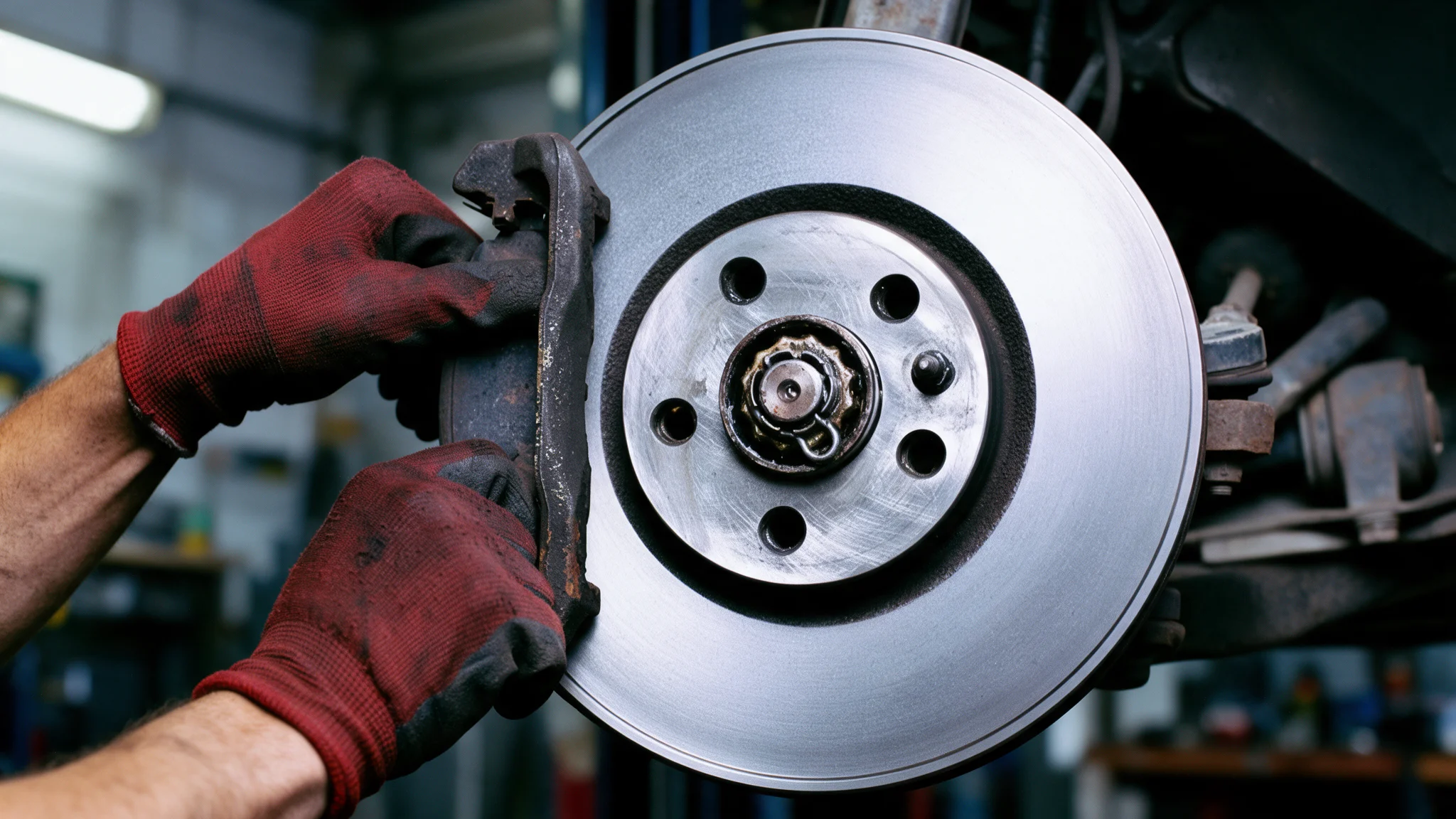
Brake pads typically last between 20,000 and 70,000 miles, with most passenger vehicles needing replacement somewhere around 40,000 to 50,000 miles. Actual service life varies widely based on vehicle weight, driving habits, friction material, and daily operating conditions. Highway driving with gentle deceleration lets pads reach the top of that range, while constant stop-and-go commuting wears friction material down much faster.
Judging brake wear by the odometer alone is unreliable, because two identical vehicles driven in different environments wear at completely different rates. A midsize sedan like the Toyota Camry running mostly on open freeway places minimal load on its braking components at steady cruising speed. A fully loaded SUV working through dense traffic generates far more heat and friction, and the friction material disappears accordingly.
| Driving Condition | Expected Pad Life | Who This Usually Describes |
|---|---|---|
| Heavy-wear conditions | About 20,000 miles | Constant stop-and-go traffic, steep descents, frequent heavy loads |
| Average daily driving | 40,000–50,000 miles | A mix of surface streets and freeway, moderate braking |
| Ideal highway conditions | 60,000–70,000 miles | Mostly steady freeway miles with gentle, anticipatory deceleration |
Front brake pads always wear faster than rear pads, because weight transfers forward every time you slow down. Under hard braking the front assembly absorbs roughly 60 to 70 percent of total stopping force, which is why front pads are commonly replaced one to two times for every rear set.
Toyota hybrid models use regenerative braking. During deceleration the electric motor reverses role and acts as a generator, converting kinetic energy into electricity for the traction battery before the friction pads ever engage. Because the pads sit in reserve through most routine slowing, mechanical wear drops sharply and service intervals stretch well beyond what a comparable gas-only vehicle delivers.
That does not mean a hybrid’s brakes can be ignored. Physical inspection remains the definitive standard, not the odometer reading, and hybrid or not, the only way to know what you have left is to measure it. You can book that measurement any time through our service center‖.
‖ WARRANTY: This information is provided for general educational purposes only and does not constitute legal advice. Warranty coverage depends on the specific terms of your vehicle’s warranty agreement. Consult your owner’s manual or a qualified legal professional for guidance on your individual situation.
Frequent hard stopping, riding the pedal on long descents, carrying heavy cargo, and navigating congested stop-and-go traffic all accelerate pad wear directly. These conditions generate extreme friction and heat, degrading the friction compound faster. Smooth, anticipatory deceleration and engine braking are the most effective habits for preserving pad thickness over time.
Abrupt braking converts the vehicle’s momentum into heat within milliseconds. When temperature builds at the pad and rotor interface, the friction compound breaks down faster and can leave uneven material deposits across the rotor face. Commuters working through Murrieta’s constant traffic-light cycles cycle the brake pedal far more often than drivers covering the same distance on open highway.
Late hard braking and riding the pedal downhill.
Stop-and-go traffic and steep mountain descents.
Heavy passenger and cargo loads, trailering and towing.§
Vehicle mass plays a major role. Heavier vehicles require greater clamping force from the calipers to come to a complete stop. A Toyota RAV4 loaded with family cargo, or a Toyota Tacoma working near its maximum 6,500-pound towing capacity§, demands higher hydraulic pressure at every stop. That added force raises working temperature across the friction lining and costs material faster than an unloaded vehicle would.
§ TOWING/PAYLOAD: Maximum towing and payload capacity figures are based on properly equipped vehicles and vary by configuration. Do not exceed any weight rating. See your owner’s manual and the vehicle’s door-jamb label for specific capacities.
To get the most life out of your braking system, a few habits make a measurable difference:
Ceramic pads deliver the longest life and the quietest operation, semi-metallic pads offer the best heat handling and stopping power under load, and organic pads provide quiet engagement at the cost of faster wear. The compound you run determines how long the lining lasts, how much dust collects on your wheels, and what replacement parts cost.
Non-asbestos organic pads are built from bonded fibers, rubber, glass, and resins. They are soft, quiet, and smooth at the pedal, which makes them common original equipment on lighter passenger cars. They also wear quickly under heat, typically lasting 20,000 to 40,000 miles, and they struggle under heavy hauling or intense stop-and-go driving.
| Material | Typical Lifespan | Dust Level | Noise Level | Best Application |
|---|---|---|---|---|
| Organic | 20,000–40,000 miles | Moderate | Quiet | Light commuting, quiet ride |
| Semi-Metallic | 30,000–60,000 miles | High | Noisier under load | Towing, hauling, performance§ |
| Ceramic | 40,000–75,000 miles | Low | Quietest | Long life, low dust, daily driving |
§ TOWING/PAYLOAD: Maximum towing and payload capacity figures are based on properly equipped vehicles and vary by configuration. Do not exceed any weight rating. See your owner’s manual and the vehicle’s door-jamb label for specific capacities.
Semi-metallic pads are 30 to 65 percent metal by weight, combining steel, iron, and copper alloys with graphite lubricants. That metal content conducts heat efficiently and holds up under load, usually returning 30,000 to 60,000 miles, though it produces more visible metallic dust and can increase rotor wear over time.
Ceramic pads combine ceramic fibers, non-ferrous filler materials, and bonding agents, and they bring a distinct set of operating characteristics:
Premium ceramic pads carry a higher cost up front, but the longer service interval generally returns the difference over time. Our parts team can confirm which compound is engineered for your Toyota‖.
‖ WARRANTY: This information is provided for general educational purposes only and does not constitute legal advice. Warranty coverage depends on the specific terms of your vehicle’s warranty agreement. Consult your owner’s manual or a qualified legal professional for guidance on your individual situation.
High-pitched squealing under braking means the built-in metal wear indicator is contacting the rotor to signal thin friction material. A harsh metallic grinding means the friction compound is gone entirely and the steel backing plate is cutting into the rotor. Other warning signs include steering wheel vibration, increased pedal travel, a spongy pedal feel, or the vehicle pulling to one side under deceleration.
Manufacturers fit small bent steel clips, called mechanical wear indicators, to the brake pad assembly. When friction material wears to roughly 3 millimeters, the clip touches the spinning rotor and produces a high-pitched squeak or chirp every time you apply the pedal. Ignoring that squeal lets the remaining compound wear through to bare metal.
High-pitched chirp or squeal from wear indicator contact.
Spongy pedal, longer stopping distance, steering vibration.
Harsh metal-on-metal grinding as the backing plate damages the rotor.
Once the backing plates reach the rotor, metal-on-metal contact destroys the smooth rotor surface. Deep scoring and heat cracks develop quickly, stopping efficiency drops sharply, and the heat generated can warp calipers and damage hub seals.
Beyond the noise, physical feedback through the pedal and steering column tells you a great deal.
| What You Notice | What It Usually Indicates |
|---|---|
| Pedal pulsation or vibration | Uneven rotor thickness or warped discs from severe heat cycling |
| Spongy or soft pedal | Air in the hydraulic lines, deteriorated brake fluid, or pad material worn far enough to require excess caliper piston travel |
| Vehicle pulls to one side | Uneven pad wear across an axle, a sticking caliper slide pin, or a hydraulic restriction on one side |
| Brake warning light illuminated | Fluid dropping low as caliper pistons extend further to compensate for worn pads |
Catching these signals early prevents costly secondary damage to rotors and calipers. If you are already hearing or feeling something, start with our guide to brake inspection signs‖.
‖ WARRANTY: This information is provided for general educational purposes only and does not constitute legal advice. Warranty coverage depends on the specific terms of your vehicle’s warranty agreement. Consult your owner’s manual or a qualified legal professional for guidance on your individual situation.
Toyota’s factory maintenance schedule calls for a brake inspection every 5,000 miles or 6 months, whichever comes first, at the same visit as your tire rotation and multi-point inspection — an interval Toyota publishes directly and one we cover further in our service FAQ‖. Technicians measure friction material thickness in millimeters, treating 3 millimeters as the replacement threshold and 2 millimeters or less as an urgent safety hazard requiring immediate service.
New passenger car brake pads measure 10 to 12 millimeters of friction material when installed. As miles accumulate, routine friction thins that layer steadily. At every comprehensive inspection, our technicians use brake pad thickness gauges to record remaining material on both the inner and outer pads at each wheel.
| Remaining Friction Material | Condition | Action |
|---|---|---|
| 10–12 mm | New pad condition | No action needed |
| 6–8 mm | Moderate wear | Monitor at each visit |
| 4–5 mm | Advanced wear | Plan replacement |
| 3 mm | Replacement threshold | Replace now |
| 2 mm or less | Critical safety hazard | Immediate replacement |
Inspecting at regular intervals also catches uneven wear early. When the inner and outer pads on the same wheel differ noticeably in thickness, the caliper is not releasing or centering properly.
A thinner inner pad typically points to a sticking caliper piston or a pad binding in its bracket. A thinner outer pad points to seized slide pins that keep the caliper from centering over the rotor. Catching either condition during a standard tire rotation lets technicians clean and service the hardware before one pad wears to the steel backing plate.
A complete brake service inspection evaluates several critical friction and hydraulic components‖:
| Component | What the Technician Evaluates |
|---|---|
| Brake pads | Friction material thickness on both the inside and outside pads at all four wheels |
| Rotor surfaces | Deep grooves, rust ridges, scoring, or thermal cracking |
| Rotor thickness | Measured with a micrometer against factory minimum discard specifications |
| Brake hoses | Flexible rubber lines checked for cracking, dry rot, swelling, or fluid seepage |
| Brake fluid | Boiling point tested and reservoir checked for moisture contamination |
‖ WARRANTY: This information is provided for general educational purposes only and does not constitute legal advice. Warranty coverage depends on the specific terms of your vehicle’s warranty agreement. Consult your owner’s manual or a qualified legal professional for guidance on your individual situation.
Drivers covering the agricultural routes around Fallbrook pick up dust and grit that can accelerate slider binding when hardware goes unserviced.
Original factory brake pads on a new Toyota passenger vehicle typically last between 40,000 and 60,000 miles under normal driving conditions. On hybrid models, pad life frequently runs longer because the electric motor handles a significant share of initial deceleration through regenerative braking.
Not automatically. Rotors that remain above minimum discard thickness with no severe heat cracking or deep scoring can stay in service. That said, resurfacing or replacing rotors alongside new pads guarantees‖ a clean, flat surface that maximizes friction contact, prevents brake squeal, and protects long-term stopping performance.
Morning brake squeal usually comes from a thin layer of surface rust that forms on cast-iron rotors overnight from atmospheric moisture or humidity. That light rust layer scrubs off within the first few stops and does not indicate damage or excessive pad wear.
Uneven inner-to-outer wear almost always traces back to caliper hardware. A thinner inner pad typically points to a sticking caliper piston or a pad binding in its bracket. A thinner outer pad typically points to corroded or seized slide pins that keep the caliper from centering itself over the rotor.
Towing a trailer or hauling heavy cargo significantly increases the energy the braking system must absorb, forcing it to dissipate substantially higher working temperatures. Vehicles operating near their maximum payload or towing ratings§ go through friction material noticeably faster and warrant more frequent pad thickness measurements.
§ TOWING/PAYLOAD: Maximum towing and payload capacity figures are based on properly equipped vehicles and vary by configuration. Do not exceed any weight rating. See your owner’s manual and the vehicle’s door-jamb label for specific capacities.
‖ WARRANTY: This information is provided for general educational purposes only and does not constitute legal advice. Warranty coverage depends on the specific terms of your vehicle’s warranty agreement. Consult your owner’s manual or a qualified legal professional for guidance on your individual situation.
Maintaining your braking system means replacing worn friction pads before thin material causes costly damage to rotors and calipers. Routine multi-point inspections performed during standard oil changes and tire rotations let technicians measure remaining pad thickness, identify sticking caliper hardware early, and confirm your brake fluid stays clean and moisture-free. More maintenance guidance is available in our Service and Parts Tips library.
Our factory-trained technicians at Temecula Valley Toyota handle complete brake care using genuine Toyota friction materials engineered specifically for your model‖. Whether you drive a hybrid sedan or a pickup, the team works with precision tools and factory service guidelines to restore stopping power and pedal feel.
‖ WARRANTY: This information is provided for general educational purposes only and does not constitute legal advice. Warranty coverage depends on the specific terms of your vehicle’s warranty agreement. Consult your owner’s manual or a qualified legal professional for guidance on your individual situation.
When you notice squealing wear indicators, pedal vibration, or reduced stopping response, address it promptly to protect the rest of the braking system. Visit us at 26631 Ynez Road in Temecula, call our service center at (951) 319-7903, or schedule your appointment online.
§ TOWING/PAYLOAD: Maximum towing and payload capacity figures are based on properly equipped vehicles and vary by configuration. Do not exceed any weight rating. See your owner’s manual and the vehicle’s door-jamb label for specific capacities.
‖ WARRANTY: This information is provided for general educational purposes only and does not constitute legal advice. Warranty coverage depends on the specific terms of your vehicle’s warranty agreement. Consult your owner’s manual or a qualified legal professional for guidance on your individual situation.
The 2026 Toyota bZ Woodland comes standard with dual-motor electronic all-wheel drive, an X-MODE® terrain management system with Grip Control¶, 8.4 inches of ground clearance, ladder-style roof rails, 18-inch aluminum wheels, protective body cladding, and a tow hitch receiver rated for up to 3,500 pounds§ when properly equipped. All-terrain tires are available on both grades….
Temecula Valley Toyota, located at 26631 Ynez Road just off Interstate 15, serves drivers and military families across southwest Riverside County with new and pre-owned vehicle sales, factory-certified service, and genuine parts. Our showroom is built around making the visit comfortable: guest lounges, complimentary Wi-Fi, bottled water, coffee, fresh popcorn and morning donuts, and a…
Toyota Tacoma 2026 alcanza una capacidad máxima de remolque de 6,500 libras en los modelos a gasolina con carrocería XtraCab de dos puertas y el equipamiento adecuado. Las configuraciones de cuatro puertas con cabina Double Cab están clasificadas para arrastrar hasta 6,400 libras, mientras que las versiones con el tren motriz híbrido i-FORCE MAX alcanzan…