

Brake Inspection Signs
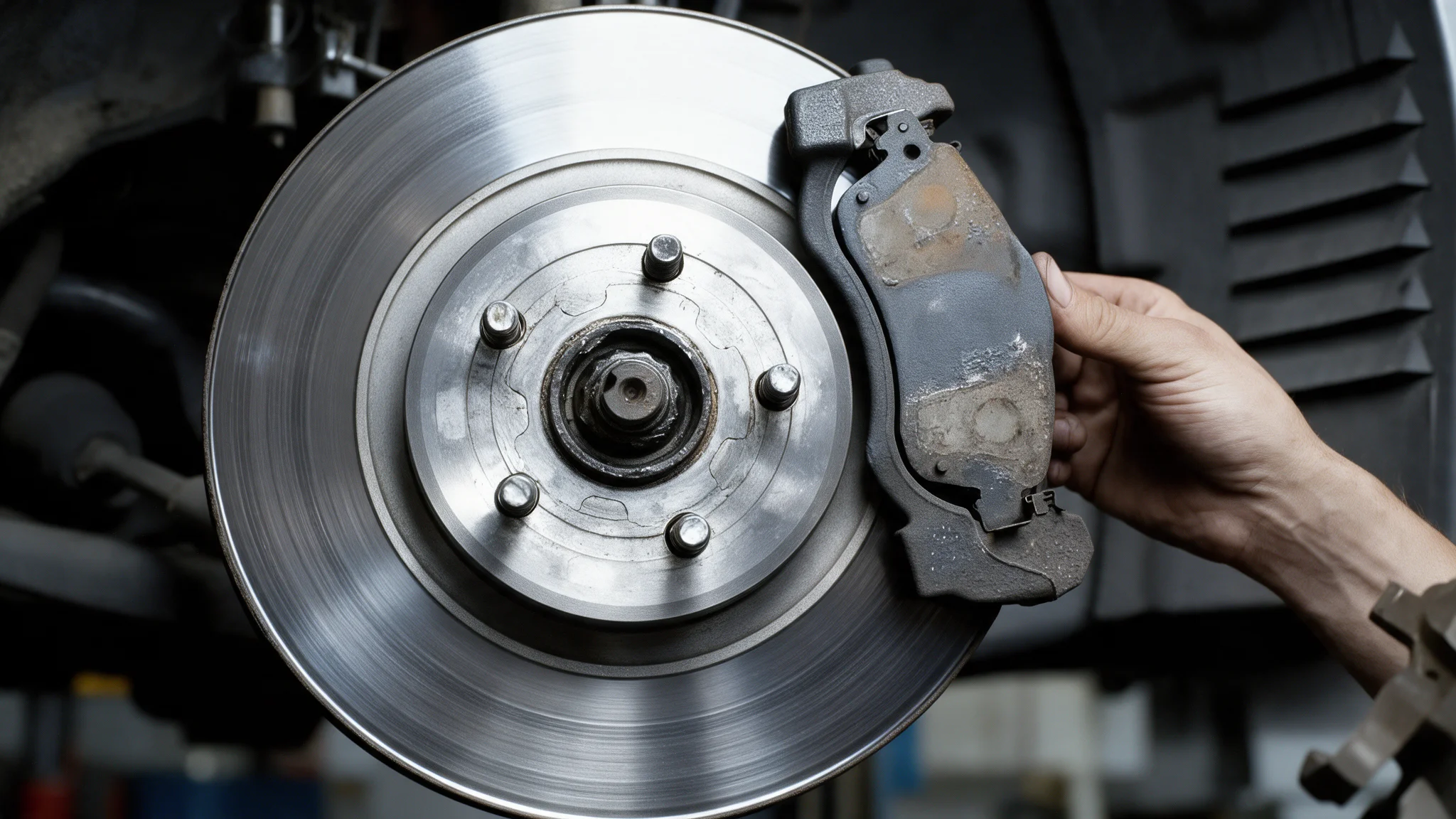
How To Tell If Your Brakes Need Service
The clearest way to tell if your brakes need service is to pay attention to five things. Listen for a high-pitched squeal when you slow down, or a harsh metallic grinding. Feel for vibration through the steering wheel or brake pedal, a pedal that goes spongy or sinks toward the floor, and the vehicle pulling to one side when you stop. Each sign points to a specific underlying condition: worn friction material, an uneven rotor surface, or a loss of hydraulic pressure. All of them affect how far your vehicle travels before it stops.
Below, the service team at Temecula Valley Toyota covers what each warning sign means, what your dashboard brake lights are telling you, how brake pad thickness is measured, and what a professional multi-point brake inspection includes.
What Are the Most Common Signs That Your Brakes Need Service?
High-pitched squealing during deceleration, harsh metallic grinding, a spongy or sinking pedal, a pulling sensation to one side, and steering wheel vibration while braking are the most common signs that your brakes require service. These indicators point to friction material depletion, rotor surface unevenness, or hydraulic fluid pressure loss, all of which compromise vehicle safety and stopping distance.
Brake systems rely on precise mechanical and hydraulic interactions to convert kinetic energy into thermal energy. When friction material wears down or fluid pressure drops, the vehicle alerts the driver through specific physical and audible behaviors.
Brake Warning Signs at a Glance
| What You Notice | What It Usually Points To |
|---|---|
| High-pitched squeal when slowing down | Wear indicator tab contacting the rotor |
| Harsh metal-on-metal grinding | Friction material fully worn; rotor surface being destroyed |
| Soft, mushy or sinking brake pedal | Air in the hydraulic lines or a failing master cylinder seal |
| Vehicle pulls left or right when braking | Seized caliper piston, collapsed brake hose, or uneven friction wear |
| Shaking or pulsating steering wheel or pedal | Rotor thickness variation or lateral runout |
| Sharp burning smell near the wheels | Severe pad overheating and glazed friction lining |
Audible Wear Indicators
Most modern brake pads feature built-in metal tabs called wear indicators. When pad friction material wears down to critical levels, this steel tab contacts the spinning brake rotor, emitting a continuous high-pitched squeal. If ignored, the friction material degrades completely, resulting in a harsh metal-on-metal grinding noise that destroys the rotor surface.
Spongy or Sinking Brake Pedal
When pressing the brake pedal yields a soft, mushy resistance or slowly sinks toward the floorboard, air has entered the hydraulic lines or the master cylinder seal is failing. This hydraulic pressure loss severely degrades stopping response.
Vehicle Pulling to One Side
If your vehicle veers toward the left or right while you apply the brakes, braking force is uneven between sides. This is typically caused by a seized caliper piston, a collapsed flexible brake hose, or uneven friction wear.
Steering Wheel and Pedal Vibration
A distinct shaking or pulsating feeling in the steering wheel or brake pedal during deceleration indicates rotor thickness variation or lateral runout. Excessive heat from sudden stops or dragging calipers can warp rotor surfaces, preventing the pads from making flat, uniform contact.
Burning Odor Near Wheels
A sharp, chemical burning smell after aggressive stopping signals severe brake pad overheating. Prolonged thermal stress glazes the friction lining and degrades hydraulic fluid stability.
Stop-and-go driving across Murrieta, Temecula, and the surrounding valley puts repeated heat cycles through your braking components. Frequent stops generate friction heat, which is why watching for these diagnostic signs matters for everyday drivers.
If you notice any of these warning signals, bring your vehicle in for an evaluation with a factory-trained technician.
The information in this article is general guidance and does not constitute a specific diagnostic or repair recommendation for any individual vehicle. Repair and maintenance decisions should be made in consultation with a certified technician based on the specific condition of your vehicle.
Cited Source: Tire Review — brake hydraulic system inspection, failure modes, and warning light diagnosis
What Does the Brake Warning Light on Your Dashboard Mean?
An illuminated brake warning light on your dashboard indicates an engaged parking brake, a low brake fluid level, worn brake pads, severe hydraulic pressure loss, or an active fault within the Anti-lock Braking System (ABS).
The instrument cluster uses dedicated warning symbols to flag specific hydraulic and electronic brake system conditions.
Brake Warning Light Quick Reference
| Warning Light | Color | What It Indicates |
|---|---|---|
| Brake Warning Symbol | Red | Often shown as an exclamation point inside a circle or the word BRAKE. Illuminates whenever the parking brake is engaged. If it stays on after you release the parking brake, fluid in the master cylinder reservoir has dropped below the minimum operating threshold, the brake pads are worn, or hydraulic pressure has failed in one of the dual braking circuits. |
| ABS Symbol | Yellow or amber | The electronic control unit has detected a fault in the anti-lock circuitry — commonly a wheel speed sensor, solenoid, or wiring harness issue, though low brake fluid and ABS pump or module failure can also trigger it. Conventional hydraulic stopping power usually remains functional, but emergency anti-lock pumping and traction management features are disabled. |
| Electric Parking Brake Warning | Varies by model | On models equipped with electronic parking actuators, a flashing light or secondary message signals a motor fault or switch error preventing proper pad clamp engagement or release. |
Low brake fluid levels frequently stem from normal pad wear, as caliper pistons extend further to push thinner friction pads and draw more fluid down into the caliper lines. A sudden pressure drop or rapidly sinking fluid level, however, signals an active hydraulic leak in a brake line, hose, or wheel cylinder. Operating a vehicle with an active hydraulic leak presents an immediate safety risk.
¶ Driver-assist and safety systems are supplemental aids and are not a substitute for safe, attentive driving. Their effectiveness depends on weather, road, and traffic conditions and other factors. Always obey traffic laws and stay attentive to the road. See your owner’s manual for system details and limitations.
Cited Source: Tire Review — red brake warning lamp, dual-circuit hydraulic failure, and ABS indicator causes
What Is the Difference Between Ceramic, Semi-Metallic, and Organic Brake Pads?
Ceramic brake pads deliver quiet performance, low dust generation, and extended wear life for everyday driving. Semi-metallic brake pads provide maximum stopping power and superior thermal dissipation under heavy loads. Organic brake pads offer soft, noise-free engagement at an economical price point but wear out faster.
Selecting the right friction material depends on vehicle engineering, driving habits, and towing requirements. Each pad compound uses distinct structural materials bound together by specialized resins.
| Feature / Compound | Organic (NAO) | Semi-Metallic | Ceramic |
|---|---|---|---|
| Material Composition | Glass, rubber, carbon, Kevlar, resin | 30%–70% steel, iron, copper alloy, graphite | Dense ceramic compound, copper matrix fibers |
| Stopping Power | Moderate | Superior / high torque | High / consistent |
| Noise Level | Very low | Moderate to high | Extremely low |
| Dust Production | Low | High (metallic dust) | Very low (light-colored dust) |
| Rotor Wear | Low | Moderate to high | Low |
| Operating Temp Range | Low to moderate | High to extreme | Very high |
| Typical Service Life | Shortest | Moderate | Longest |
| Relative Cost | Lowest | Moderate | Highest |
| Ideal Application | Light daily commutes, entry vehicles | Towing, hauling, sports cars, trucks | Daily passenger cars, family crossovers |
Ceramic Brake Pads
Developed in the mid-1980s, ceramic brake pads consist of a dense ceramic material embedded with fine copper fibers that enhance thermal conductivity and friction grip. They run quietly because the ceramic compound and copper-fiber matrix generate less noise than metallic friction materials. They also produce a fine, light-colored dust that does not easily stick to alloy wheels. Ceramic material absorbs less kinetic heat directly, deflecting more thermal energy back into the rotor and the surrounding brake hardware — a trade-off worth understanding when you choose a compound. For daily suburban commutes across Murrieta, ceramic pads remain a popular choice.
Semi-Metallic Brake Pads
Formulated with 30% to 70% metallic elements such as steel, iron, and copper, semi-metallic pads excel at drawing heat away from the rotor face. This high thermal conductivity helps prevent fluid boiling and brake fade during heavy braking demands, which makes them the common choice for trucks, SUVs, and vehicles used for towing or hauling. The trade-offs include a firmer pedal feel, increased rotor surface wear, and elevated metallic dust output.
Non-Asbestos Organic (NAO) Brake Pads
Organic pads use soft fibers including glass, carbon, rubber, and Kevlar bonded with high-temperature resins. They deliver smooth, predictable initial pedal bite and quiet operation without imposing heavy wear on cast-iron brake rotors. Because organic materials degrade rapidly under high thermal friction, they require more frequent replacement and are not suited to aggressive mountain driving or heavy trailering.
Our service department replaces worn friction pads with original equipment specification materials matched to your model’s curb weight and suspension dynamics. If you want to know how long a given compound should last on your vehicle, our guide to how long brake pads last breaks down the mileage factors.
Cited Source: Bridgestone — ceramic, semi-metallic, and organic brake pad composition and development history | Summit Racing — friction material comparison for rotor wear, service life, dust, stopping power and relative cost
What Is the Minimum Safe Thickness for Brake Pads and How Is It Measured?
Brake pads should be replaced once remaining friction material reaches 4 mm or less. That is the threshold recommended by Akebono, which supplies original equipment brake pads to Toyota. Three millimeters, roughly 1/8 inch, is the widely used absolute minimum. Any pad worn to 2 mm or less needs immediate replacement to avoid severe rotor gouging and possible braking system failure.
Brand-new front brake pads typically measure between 10 mm and 12 mm of friction material, excluding the steel backing plate. Rear pads commonly start thinner, between 8 mm and 10 mm. As miles accumulate, friction material wears down through thermal abrasion against the rotor face.
Technicians track friction material life using specific dimensional thresholds.
| Friction Material Thickness | Zone | What It Means |
|---|---|---|
| 12 mm – 6 mm | Safe | Healthy friction life remaining; no action needed |
| 6 mm – 4 mm | Caution | Nearing replacement; plan your next brake service |
| 4 mm – 3 mm | Replace | At the recommended replacement threshold; schedule service now |
| 2 mm or less | Danger | Replace immediately — severe risk of backing plate separation, rotor destruction, and caliper piston over-extension |
Visual Measurement Without Removing Wheels
Friction pad thickness can often be inspected visually through the open spokes of modern aluminum alloy wheels.
- Park the vehicle on a level surface, engage the parking brake, and allow the wheel assemblies to cool completely.
- Shine a bright flashlight through the wheel spokes directly onto the brake caliper body.
- Locate the caliper inspection window where the brake pad sits against the flat face of the cast-iron rotor.
- Position a brake pad thickness gauge or small millimeter ruler alongside the friction material, measuring from the outer rotor surface to the steel pad backing plate.
If wheel spoke geometry blocks visual access, the wheel assembly must be removed to measure inner and outer pad thickness accurately with a digital micrometer or vernier caliper. For a broader view of replacement timing, see our guide to how long car brakes last.
Cited Source: Akebono — original equipment brake pad supplier; new pad thickness, safe/caution/danger thresholds and the 4 mm replacement recommendation | Toyota Scheduled Maintenance Guide — factory brake inspection intervals and inspection items
What Is Included in a Professional Multi-Point Brake Inspection?
A professional multi-point brake inspection includes measuring friction pad thickness, evaluating rotor surface runout and parallelism, testing caliper slider operation, checking brake fluid condition, inspecting hydraulic lines for damage, and verifying parking brake function.
Our certified technicians perform a systematic evaluation of all mechanical, hydraulic, and electronic braking components.
Friction Pad and Shoe Analysis
Technicians measure inner and outer pad thickness across all four wheels using precision gauges to identify uneven wear patterns caused by sticking caliper pins or improper hydraulic pressure distribution.
Rotor and Drum Condition Inspection
Rotors are inspected for deep scoring, rust lips, cracking, and thermal glazing. Technicians use a dial indicator to measure lateral runout and a digital micrometer to check parallel thickness variation.
Caliper and Hardware Evaluation
Inspection of caliper housing bodies, hydraulic piston seals, slider pins, and anti-rattle clips. Technicians verify that caliper slides move freely and that rubber dust boots are free from tears or fluid leaks.
Hydraulic System and Fluid Testing
Brake fluid is tested for moisture content using an electronic boiling-point tester and for copper contamination using test strips. Flexible rubber brake lines and rigid steel lines are checked for cracking, corrosion, bulging, or fluid seepage.
Parking Brake and Actuator Check
Manual cables or electronic actuator motors are tested for proper clamp force, cable tension, and full release travel.
Electronic Brake-force Distribution¶ works across all four wheels to balance braking effort during hard stops. A brake system in good condition matters as much to the electronics as it does to the hardware. Keeping up with routine evaluations is part of the broader Toyota maintenance schedule that keeps your vehicle reliable.
Cited Source: Tire Review — hydraulic system and brake fluid testing procedures | Toyota Scheduled Maintenance Guide — factory inspection items by interval | Toyota Safety — Star Safety System and Electronic Brake-force Distribution
Essential Toyota Brake Care Questions Answered
How often should Toyota brake pads be inspected?
Toyota’s factory maintenance schedule calls for a visual inspection of brake linings, drums, pads, and discs every 5,000 miles or 6 months, whichever comes first. Brake lines and hoses are inspected at the 15,000-mile interval. Vehicles driven frequently in dense stop-and-go traffic, hot climates, or mountain roads benefit from more frequent visual checks.
What causes brake pedal pulsation when stopping at highway speeds?
Brake pedal pulsation is caused by thickness variation or uneven friction material deposits across the rotor face. When a rotor develops hot spots or warps out of parallel, the caliper pistons push back against the hydraulic fluid during rotation, transmitting a pulsation through the brake pedal.
How does ToyotaCare cover factory brake maintenance?
For 2026 and earlier Toyota models, ToyotaCare‖ covers normal factory-scheduled maintenance for 2 years or 25,000 miles, whichever comes first. Coverage terms differ for 2027 models, so confirm the plan that applies to your specific vehicle. The program includes multi-point inspections, where factory-trained technicians check brake components and inspect fluid levels at the specified service intervals.
| Model Year | No-Cost Factory-Scheduled Maintenance |
|---|---|
| 2026 and earlier | 2 years or 25,000 miles, whichever comes first |
| Applicable 2027 models | 1 year or 10,000 miles, whichever comes first |
‖ This information is provided for general educational purposes only and does not constitute legal advice. Warranty coverage depends on the specific terms of your vehicle’s warranty agreement. Consult your owner’s manual or a qualified legal professional for guidance on your individual situation.
Why does brake fluid need to be replaced if there are no visible leaks?
Brake fluid is hygroscopic, meaning it absorbs ambient moisture through microscopic pores in flexible rubber brake hoses over time. Water accumulation lowers the boiling point of the fluid, creating vapor bubbles under heavy braking that cause a spongy pedal and internal hydraulic corrosion. Our guide on how to check your brake fluid walks through what to look for at home.
Do Toyota hybrid vehicles wear out brake pads faster or slower?
Toyota hybrids often go longer between brake pad replacements than comparable gas-only vehicles, though actual pad life varies with driving style, terrain, climate, and traffic conditions. Models like the 2026 RAV4 are now offered exclusively as a hybrid or plug-in hybrid. They use regenerative braking to slow the vehicle with electric motor resistance, recovering energy for the battery before the friction pads engage.
Cited Source: Toyota — ToyotaCare coverage terms by model year, including the 2027 change | Toyota Scheduled Maintenance Guide — brake inspection intervals | Consumer Reports — 2026 RAV4 hybrid-only lineup
Schedule Brake Service at Temecula Valley Toyota
Keeping your braking system in good operating condition is essential for driver safety and vehicle longevity. Our factory-trained service team handles complete multi-point evaluations, rotor resurfacing, and OEM component replacement. Stop by our service center at 26631 Ynez Road in Temecula or call our service desk to discuss what your vehicle needs. For do-it-yourself drivers, our genuine Toyota parts department stocks exact-fit pads, rotors, and factory brake fluid for your vehicle. You can also browse more Service and Parts Tips for other maintenance topics.
Disclaimers
The information in this article is general guidance and does not constitute a specific diagnostic or repair recommendation for any individual vehicle. Repair and maintenance decisions should be made in consultation with a certified technician based on the specific condition of your vehicle.
¶ Driver-assist and safety systems are supplemental aids and are not a substitute for safe, attentive driving. Their effectiveness depends on weather, road, and traffic conditions and other factors. Always obey traffic laws and stay attentive to the road. See your owner’s manual for system details and limitations.
‖ This information is provided for general educational purposes only and does not constitute legal advice. Warranty coverage depends on the specific terms of your vehicle’s warranty agreement. Consult your owner’s manual or a qualified legal professional for guidance on your individual situation.