

2026 Toyota RAV4 Plug-in Hybrid vs. Hybrid: Which One Fits Your Drive?
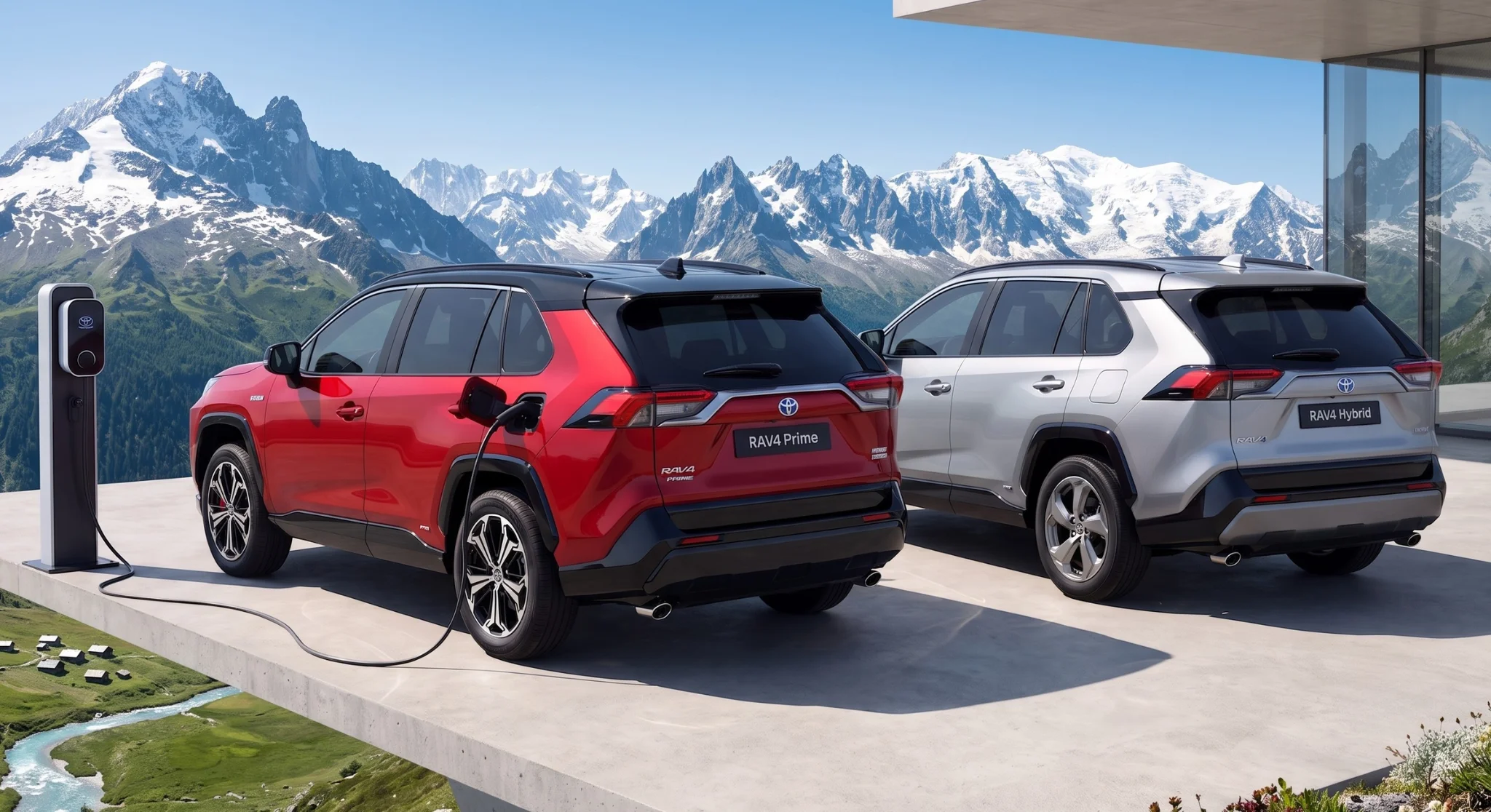
Every 2026 Toyota RAV4 is electrified. Toyota retired the gas-only model when the RAV4 entered its sixth generation, which leaves Temecula shoppers with two choices rather than three: the RAV4 Hybrid, which never needs to be plugged in, and the RAV4 Plug-in Hybrid, which can cover most local driving on electricity alone. If you shopped a RAV4 a few years ago, you may know the plug-in as the RAV4 Prime; Toyota retired that name after the 2024 model year.
The decision comes down to three practical questions: how far you drive on a typical day, whether you can charge at home, and how much cargo room you need. Everything else is a smaller consideration. For a broader look at what changed this year, see our 2026 Toyota RAV4 research page.
2026 RAV4 Hybrid vs. Plug-in Hybrid at a Glance
Both powertrains start from the same 2.5-liter four-cylinder engine paired with an eCVT, and both were updated for the sixth generation. The table below covers the differences that actually affect the decision. Specifications are per Toyota’s 2026 RAV4 announcement and Toyota.com, with cargo figures independently verified by Edmunds.
| Specification | 2026 RAV4 Hybrid | 2026 RAV4 Plug-in Hybrid |
|---|---|---|
| Combined Horsepower | 226 hp (FWD) / 236 hp (AWD) | 324 hp |
| Drivetrain | Front-wheel drive or all-wheel drive, by grade | All-wheel drive standard on every grade |
| Engine & Transmission | 2.5L four-cylinder, eCVT | 2.5L four-cylinder, eCVT |
| All-Electric Range | Not applicable — cannot be plugged in | Up to 52 miles, manufacturer-estimated (SE, XSE) |
| EPA-Estimated Fuel Economy | Up to 47 city / 40 hwy / 43 combined MPG (LE, SE, XLE Premium FWD) | Runs as a hybrid once the battery is depleted; estimated ratings vary by grade — see our MPG guide |
| Cargo Behind Rear Seats | 37.8 cu ft | 33.5 cu ft |
| Maximum Cargo Volume | 70.4 cu ft | 63.5 cu ft |
| Maximum Towing | 1,750 lbs (FWD and LE AWD) / 3,500 lbs (AWD, except LE) | 3,500 lbs (SE, XSE, Woodland) |
| Grades Available | 6 — LE, SE, XLE Premium, Woodland, XSE, Limited | 4 — SE, Woodland, XSE, GR SPORT |
| Starting TSRP | From $33,350 | From $42,950 |
Maximum towing and payload capacity figures are based on properly equipped vehicles and vary by configuration. Do not exceed any weight rating. See your owner’s manual and the vehicle’s door-jamb label for specific capacities.
How the Two Powertrains Differ
RAV4 Hybrid
The RAV4 Hybrid uses Toyota’s fifth-generation hybrid system and generates 226 combined horsepower in front-wheel drive or 236 combined horsepower with all-wheel drive. It charges its own small battery through regenerative braking, so it never needs to be plugged in, and it refuels exactly like any gas vehicle.
RAV4 Plug-in Hybrid
The RAV4 Plug-in Hybrid uses Toyota’s sixth-generation plug-in system, pairing that same engine with a 22.7-kWh battery for 324 combined horsepower. That is 88 horsepower more than the all-wheel-drive Hybrid, and the gap is easy to feel when merging onto I-15. Charge it overnight and you can run local errands without burning gasoline. Let the charge run out and it simply operates as a conventional hybrid, so you are never stranded by an empty battery.
The Drivetrain Difference Most Shoppers Miss
All-wheel drive is standard on every Plug-in Hybrid grade. On the Hybrid, all-wheel drive is available on some grades but not standard across the lineup, since front-wheel drive returned as an option for 2026 and anchors the entry price. That single distinction changes both the price comparison and the towing comparison.
Cargo and Passenger Space
This is where the two genuinely separate, and it is worth being direct about it rather than glossing over the gap.
The RAV4 Hybrid offers 37.8 cubic feet of cargo volume behind the rear seats, expanding to 70.4 cubic feet with the 60/40 split-folding rear seatback down. The Plug-in Hybrid’s larger battery costs it roughly four cubic feet behind the seats, at 33.5 cubic feet, and about seven cubic feet at maximum, at 63.5 cubic feet. Both figures are confirmed by Edmunds.
Four cubic feet is not a rounding error. It is the difference between a full week of luggage and a tight fit. If you regularly load strollers, hockey bags, or a Costco run for a family of five, the Hybrid gives you meaningfully more room. If your cargo area mostly carries groceries and a soccer bag, the difference will rarely register.
Passenger space is unchanged between the two. Both seat five, both use the same 60/40 split-folding rear seatback, and both share the sixth-generation cabin.
Electric Range and Fuel Efficiency
If You Can Charge at Home
The Plug-in Hybrid delivers up to 52 miles of manufacturer-estimated all-electric range on the SE and XSE grades, with the Woodland estimated at 49 miles and the GR SPORT at 48, as reported by Cars.com. For a Temecula commuter running errands around town or driving into Murrieta and back, that covers a typical day without using gasoline. When the battery is depleted, it continues as a conventional hybrid.
If You Cannot
The RAV4 Hybrid is built for drivers who want efficiency without changing anything about how they refuel. Front-wheel-drive LE, SE, and XLE Premium grades lead the lineup at an EPA-estimated 47 city / 40 highway / 43 combined MPG. Adding all-wheel drive lowers the EPA-estimated combined rating by roughly one to two MPG depending on grade. There is no charging cable, no schedule, no home electrical work.
The Rule of Thumb
If your daily driving fits inside the electric range and you can plug in overnight, the Plug-in Hybrid will cost less to operate. If you cannot charge at home, or you spend most of your miles on the freeway, the Hybrid captures nearly all of the efficiency benefit with none of the logistics.
For grade-by-grade estimated ratings on both powertrains, see our 2026 RAV4 MPG guide.
EPA-estimated fuel economy figures are for comparison purposes only. Your actual mileage will vary depending on driving conditions, how you drive and maintain your vehicle, battery age/condition, and other factors.
Technology
Both powertrains share the same technology package, and it is worth clearing up a common misconception: the screens are not a plug-in advantage.
A 12.3-inch digital gauge cluster is standard on every 2026 RAV4, Hybrid and Plug-in Hybrid alike. The latest Toyota Audio Multimedia system runs on a 10.5-inch touchscreen on most grades, with a 12.9-inch display available on upper grades across both powertrains.
Wireless Apple CarPlay and Android Auto are standard, a wireless charging pad is standard on most grades, and USB-C ports are distributed throughout the cabin, per Edmunds. The new Arene software platform enables over-the-air updates so the system stays current after you drive off the lot.
Choose your grade for the screen you want. Choose your powertrain for how you drive.
Safety
Every 2026 RAV4 comes standard with Toyota Safety Sense 4.0, and the RAV4 is the first Toyota to receive it. There is no safety trade-off between the two powertrains and no grade you have to reach for to get the suite.
Pre-Collision System with Pedestrian Detection
Provides forward-collision alerts and can apply automatic emergency braking.
Full-Speed Range Dynamic Radar Cruise Control
Maintains a set distance from the vehicle ahead of you.
Lane Departure Alert with Steering Assist
Detects lane markings and the road’s edge at speeds above 30 mph.
Road Sign Assist
Reads posted signs and displays them for the driver.
Pricing and Grades
The RAV4 Hybrid spans six grades and starts at a Total Suggested Retail Price of $33,350. The RAV4 Plug-in Hybrid spans four grades and starts at $42,950, with the first-ever GR SPORT topping the entire RAV4 range.
| Powertrain | Grades | Starting TSRP | Top Grade TSRP |
|---|---|---|---|
| 2026 RAV4 Hybrid | LE, SE, XLE Premium, Woodland, XSE, Limited | $33,350 | $44,750 (Limited) |
| 2026 RAV4 Plug-in Hybrid | SE, Woodland, XSE, GR SPORT | $42,950 | $49,950 (GR SPORT) |
That places roughly $9,600 between the two entry points. Whether the plug-in earns that back depends almost entirely on how many of your miles you can drive on electricity. For a full grade-by-grade price and equipment breakdown, see our 2026 RAV4 trims and pricing guide.
Total Suggested Retail Price (TSRP) for new vehicles includes manufacturer and distributor options and delivery, processing, and handling fees, which are subject to change at any time. TSRP excludes taxes, title, license, dealer-installed options, accessories, fees and charges. TSRP is not the dealer advertised price. Dealer price will vary. The dealer sets the final price.
Which One Should You Choose?
The decision is rarely close once you know your own driving pattern. Use the table below as a starting point, then drive both.
| Your Situation | Better Choice |
|---|---|
| You can charge at home overnight | Plug-in Hybrid |
| You have no home charging access | Hybrid |
| Most of your driving is local and under 50 miles a day | Plug-in Hybrid |
| You drive high freeway mileage | Hybrid |
| You regularly load bulky cargo | Hybrid |
| You want the quickest RAV4 and standard all-wheel drive | Plug-in Hybrid |
| You want the lowest entry price and the most grades to choose from | Hybrid |
The most reliable way to decide is to drive both back to back. Visit Temecula Valley Toyota at 26631 Ynez Road in Temecula, or call our sales team at (951) 319-7911 to arrange a test drive of each.
Frequently Asked Questions
Does the RAV4 Plug-in Hybrid require a special home charger?
No. A charging cable is included, and it works with household current for overnight charging. Installing a 240-volt Level 2 charger at home meaningfully shortens charging time, but it is an upgrade rather than a requirement. Our sales team can walk you through the charging equipment on a specific vehicle.
Which is better for long highway trips?
Both are strong highway vehicles for different reasons. The Hybrid needs no planning at all: fill up and go. The Plug-in Hybrid is quieter and considerably quicker with 324 combined horsepower, and it does not need to be charged to complete a long trip, though starting with a full battery improves overall efficiency.
What happens if I forget to plug in the RAV4 Plug-in Hybrid?
Nothing disruptive. It operates as a conventional hybrid, moving between electric and gasoline power automatically. You will not be stranded by a depleted battery as long as there is fuel in the tank.
Which grades offer all-wheel drive?
All-wheel drive is standard on all four Plug-in Hybrid grades. On the Hybrid, it is available on some grades, while front-wheel drive is offered on others and delivers the lineup’s highest fuel economy ratings.
How much can the 2026 RAV4 tow?
The RAV4 Hybrid is rated at 1,750 pounds with front-wheel drive and on the LE with all-wheel drive, and 3,500 pounds on all other all-wheel-drive grades. The RAV4 Plug-in Hybrid is rated at 3,500 pounds on the SE, XSE, and Woodland grades. Toyota does not recommend towing with the GR SPORT.