

2026 Toyota Prius Plug-in Hybrid Electric Range, Charging and EV Mode Guide
The 2026 Toyota Prius Plug-in Hybrid, sold as the Prius Prime through 2024, is built to cover most daily driving on electricity alone. A 13.6 kWh lithium-ion battery pairs with a 2.0-liter four-cylinder engine and two electric motor-generators. On the SE trim, that combination delivers an EPA-estimated all-electric driving range of up to 44 miles. For many commuters, that covers the whole round trip without burning a drop of gas.
For drivers heading out of Murrieta or Menifee toward nearby job centers, that range covers a typical day with room to spare. When the battery runs down, the car keeps going as a conventional hybrid on its gasoline engine and regenerative braking. There is no charging stop to plan around.
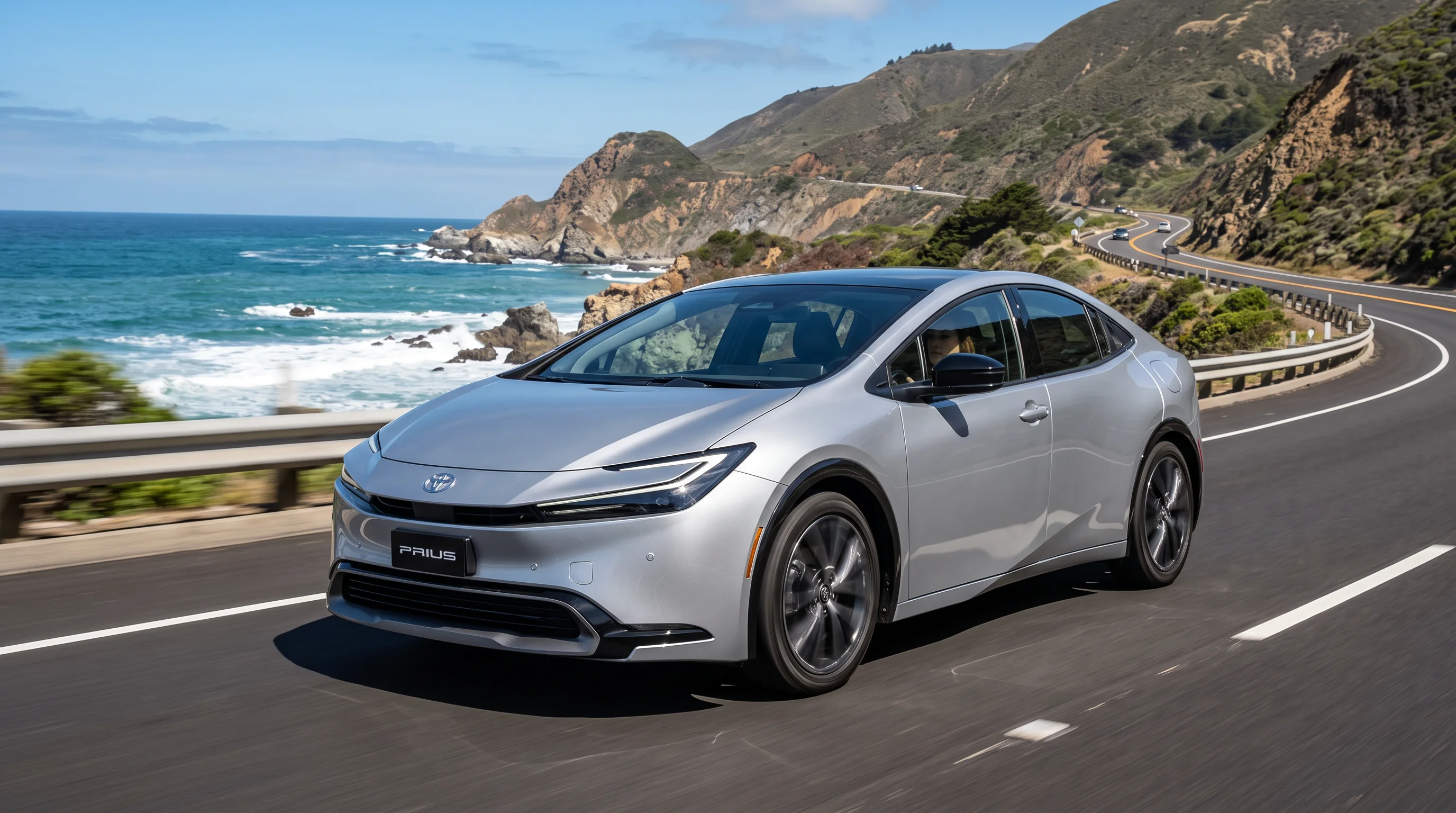
Powertrain Specs and Electric Range by Trim
Every 2026 Prius Plug-in Hybrid uses the same powertrain. What changes from trim to trim is wheel size and equipment. That is what moves the EPA-estimated range and efficiency numbers.
Powertrain at a Glance
| Specification | 2026 Prius Plug-in Hybrid |
|---|---|
| Engine | 2.0-liter four-cylinder |
| Electric motors | Two electric motor-generators |
| Battery | 13.6 kWh lithium-ion |
| Combined output | 220 horsepower |
| Drivetrain | Front-wheel drive (all trims) |
| Onboard charger | 3.5 kW |
| Curb weight | 3,461–3,571 lbs (varies by trim) |
Full powertrain details are published by Toyota.
EPA-Estimated Range and Efficiency by Trim
The 2026 lineup runs four trims: SE, XSE, Nightshade Edition and XSE Premium. The SE rides on smaller wheels, so it posts the best numbers in the lineup. The other three share one set of ratings.
| Trim | EPA-Estimated All-Electric Range | EPA-Estimated Combined MPGe | EPA-Estimated Combined MPG (Gas Only) |
|---|---|---|---|
| SE | 44 miles | 127 MPGe | 52 MPG |
| XSE | 39 miles | 114 MPGe | 48 MPG |
| Nightshade Edition | 39 miles | 114 MPGe | 48 MPG |
| XSE Premium | 39 miles | 114 MPGe | 48 MPG |
EPA-estimated fuel economy figures are for comparison purposes only. Your actual mileage will vary depending on driving conditions, how you drive and maintain your vehicle, battery age/condition, and other factors.
What Can Reduce Your Electric Range
EPA estimates are a solid baseline. Everyday conditions still move the number up or down.
| Factor | Effect on Electric Range |
|---|---|
| Hard acceleration and high speeds | Pulls more energy from the battery than steady, moderate driving |
| Heavy cargo | Adds load to the electric motors and cuts efficiency |
| Steep, sustained grades | Forces the motor to draw more current than level driving |
| Sustained cold weather | Temporarily lowers the usable capacity of a lithium-ion battery |
Why Climate Matters Less Here
Cold is the biggest seasonal drag on electric range in most of the country. Southern California winters do not deliver that kind of sustained cold. Local owners generally see far less seasonal variation than owners in colder states.
Curb weight works in your favor too. At roughly 3,500 pounds, this is a light, aerodynamic car. Loading the hatch to its limit will still shorten how far you go on battery. To see how these factors play out across trims, browse the 2026 Prius Plug-in Hybrid inventory at Temecula Valley Toyota.
How EV Mode Works
The system runs on electricity whenever it can. In EV Mode the car uses the electric motors alone, as long as the battery holds enough charge.
When the Gasoline Engine Starts
The 2.0-liter engine starts on its own when the electric motors cannot cover the demand. Per the owner’s manual, that includes:
- Pressing the accelerator to the floor to pass
- Merging onto a fast-moving freeway
- Climbing a steep, sustained grade
- Running the windshield defogger
- Unusually high or low hybrid system temperature
- Speeds above roughly 84 mph
Each transition is seamless. EV operation picks back up once conditions allow.
Charging Times: Level 1 vs. Level 2
Charging fits around your schedule rather than dictating it. The car uses a 3.5 kW onboard charger, which sets how fast the battery can take on electricity. Toyota includes a dual-voltage charging cable with every vehicle, so you can use either outlet type from day one.
| Charging Detail | Level 1 (120V) | Level 2 (240V) |
|---|---|---|
| Equipment | Standard household outlet | Home or public 240-volt charger |
| Full charge from empty | Approximately 11 hours | Approximately 4 hours |
| Best for | Plugging in overnight | Charging more than once a day |
Installing a Home Charger
Level 1 works well if you plug in overnight and do not need a fast turnaround. Level 2 is the practical upgrade if you charge more than once a day. That is why many owners add a dedicated 240-volt wall charger at home.
If you go that route, hire a licensed electrician. A professional confirms your panel can carry the load, installs the correct breaker, and mounts the hardware safely.
Hybrid Battery Warranty Coverage
The battery that delivers your electric range carries its own long-term coverage, separate from the standard new-vehicle warranties.
| Coverage | Term |
|---|---|
| Hybrid battery | 10 years or 150,000 miles |
| New-vehicle limited warranty | 3 years or 36,000 miles |
| Powertrain | 5 years or 60,000 miles |
Terms are published by Toyota Owners.
This information is provided for general educational purposes only and does not constitute legal advice. Warranty coverage depends on the specific terms of your vehicle’s warranty agreement. Consult your owner’s manual or a qualified legal professional for guidance on your individual situation.
California Clean Air Vehicle Decal and HOV Lane Access
Southern California drivers have long chosen plug-in hybrids partly for carpool lane access. That has changed.
California’s Clean Air Vehicle decal program ended at midnight on September 30, 2025. Its federal authorization under Section 166 of Title 23 of the U.S. Code expired, and every existing decal expired with it. No new decals are being issued for plug-in hybrids or electric vehicles.
Since October 1, 2025, every vehicle must meet the posted occupancy requirement to use an HOV lane. The Prius Plug-in Hybrid no longer qualifies for single-occupant access, regardless of purchase date or trim. Program details are published by the California DMV, and the California Air Resources Board confirms no federal extension has been authorized.
Quick Answers Before You Visit Our Showroom
Can I drive the Prius Plug-in Hybrid if I never plug it in to charge?
Yes. The vehicle works as a standard hybrid even if you never plug it into an outlet. It will use regenerative braking to capture energy and assist the gasoline engine, though you will not reach maximum efficiency or use the all-electric driving range.
Is there an all-wheel drive version of the Prius Plug-in Hybrid?
No. The Prius Plug-in Hybrid is offered exclusively with front-wheel drive across all four trims. Toyota does offer all-wheel drive on other electrified models, and our sales team can walk you through those options in person.
What are the terms of the standard Toyota factory warranty?
Every new Toyota is backed by a 3-year or 36,000-mile new-vehicle limited warranty and a 5-year or 60,000-mile powertrain warranty. The hybrid battery is covered separately for 10 years or 150,000 miles.
Drive Home a New Level of Efficiency
Balancing daily electric driving against long-distance flexibility is exactly what a plug-in hybrid is built for. Our team can walk you through the four trims and show you how the range and charging numbers translate to your commute. Visit our showroom at 26631 Ynez Road, Temecula, CA 92591, or call our sales team at (951) 319-7911 to check current availability. You can also explore more model guides on our Toyota research hub.
Disclaimers
EPA-estimated fuel economy figures are for comparison purposes only. Your actual mileage will vary depending on driving conditions, how you drive and maintain your vehicle, battery age/condition, and other factors.
This information is provided for general educational purposes only and does not constitute legal advice. Warranty coverage depends on the specific terms of your vehicle’s warranty agreement. Consult your owner’s manual or a qualified legal professional for guidance on your individual situation.