

Wiper Blade Replacement in Temecula
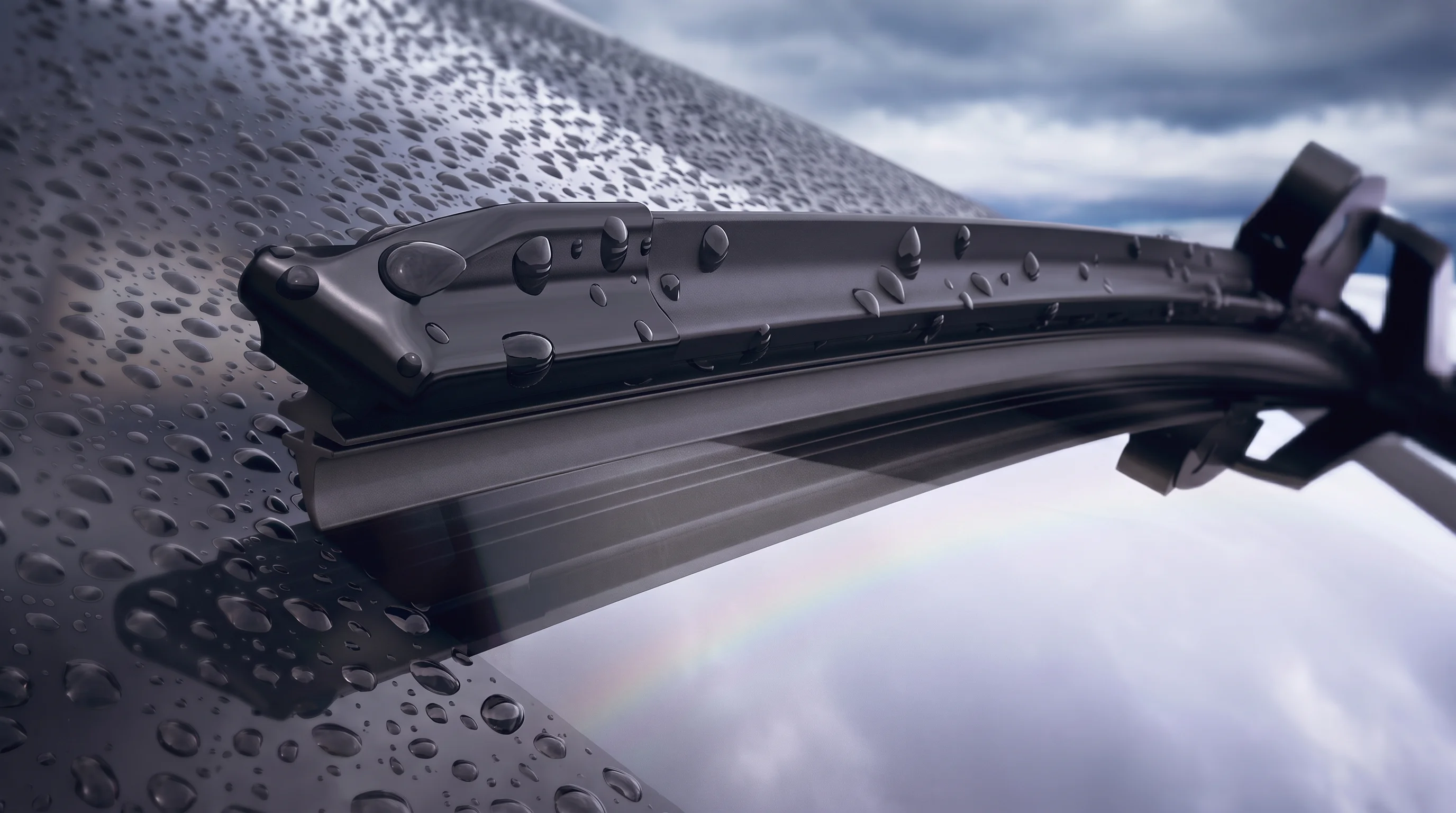
Streaking, chattering, and missed patches across the glass are the clearest signs that your wipers are due for replacement. This guide covers the three blade designs, how long each one lasts, how to find the right size, and how to change them yourself. It also covers when it makes more sense to let our service team handle it.
What Are the Different Types of Windshield Wiper Blades?
Windshield wiper blades come in three designs: conventional, beam, and hybrid. Conventional blades use an exposed metal frame with multiple pressure points. Beam blades use a bracketless curved spine that holds even pressure across the glass. Hybrid blades combine a conventional metal frame with an aerodynamic shell.
| Blade Type | Structure | Best Suited For | Typical Replacement |
|---|---|---|---|
| Conventional | Exposed metal frame with spring-loaded claws | Mild to moderate climates where heavy rain is rare | About every 6 months |
| Beam | Bracketless curved spine with no external frame | Curved modern windshields; quieter, more even wiping in heavy rain | About twice as long as conventional |
| Hybrid | Metal frame with pivoting suspension points under an aerodynamic shell | Drivers who want framed-blade pressure with a low-profile look | 6 to 12 months (general interval) |
The information in this article is general guidance and does not constitute a specific diagnostic or repair recommendation for any individual vehicle. Repair and maintenance decisions should be made in consultation with a certified technician based on the specific condition of your vehicle.
Conventional Blades
Conventional framed blades are the most affordable option. An exterior metal skeleton uses spring-loaded claws to press the rubber squeegee against the glass at several separate points. They work well in mild to moderate climates where heavy rain is rare. The exposed frame does collect road grit over time, and it sits more exposed to wind at speed.
Beam Blades
Beam blades do away with the external skeleton. A single curved element follows the arc of a modern windshield and wraps against the glass. That spreads pressure evenly along the full length of the wiping edge. The result is quieter operation and fewer streaks in heavy rain.
Hybrid Blades
Hybrid blades sit between the two. A conventional metal frame supplies the pressure through pivoting suspension points that press the rubber against curved glass. An aerodynamic shell covers the assembly, shielding it from airborne debris while keeping a low profile.
How Long Do Wiper Blades Last?
Plan on replacing wiper blades one to two times a year. That works out to roughly every 6 to 12 months. Replace them sooner if heat, UV exposure, or road grime wears the rubber edge first. Conventional blades typically need replacing around every six months. Beam blades cost more up front but can last about twice as long.
Toyota is more specific. Toyota’s Warranty & Maintenance Guide calls for scheduled maintenance every 5,000 miles or six months, whichever comes first. Wiper blades are inspected at every one of those visits. That means a wiper check belongs in the same appointment as your oil change, not a separate trip.
Heat and sun are what shorten blade life. Prolonged exposure dries the rubber until it splits and stiffens. Once the edge hardens, it skips across the glass instead of sweeping it. That is what produces the chattering and missed patches drivers notice the first time it rains after a long dry stretch.
Signs Your Wiper Blades Need Replacing
Toyota’s maintenance guide sets a simple standard: blades should show no signs of cracking, splitting, wear, contamination, or deformation, and they should clear the windshield without streaking or skipping. Here is what that looks like day to day.
| Warning Sign | What You Will Notice |
|---|---|
| Streaking | Lines left behind after a full sweep |
| Smearing | Water pushed around rather than cleared |
| Skipped patches | Sections of glass the blade never touches |
| Chattering or squeaking | Noise through the stroke |
| Film residue | A haze left across the windshield |
| Damaged rubber | A torn, split, or hardened wiping edge |
The information in this article is general guidance and does not constitute a specific diagnostic or repair recommendation for any individual vehicle. Repair and maintenance decisions should be made in consultation with a certified technician based on the specific condition of your vehicle.
How Do You Find the Right Wiper Blade Size?
Wiper blades are sized in inches, measured along the rubber edge from tip to tip. Most modern vehicles use asymmetrical front wipers. Do not assume both front blades are the same size, because the driver-side blade is usually the longer of the two. Each one has to be measured or looked up on its own. If your vehicle has a rear window wiper, that blade is different again, and it often uses its own connector style.
Sizes vary by model, model year, and body style. The wrong length causes problems right away. A blade that is too long can strike the windshield moulding or overlap the opposing wiper arm. One that is too short leaves unwiped gaps in your field of view.
Rather than guessing, check the owner’s manual for your specific vehicle. You can also call the Parts Department at (951) 383-3094 with your year, model, and VIN. The parts team can confirm exact fitment, including the connector style your wiper arms use, whether that is a J-hook, top-lock, side pin, or bayonet attachment.
How Can Temecula Drivers Safely Replace Their Own Wiper Blades?
Replacing your own wiper blades is a short job. The most important precaution is laying a thick, folded towel over the windshield beneath the wiper arms before you begin. Wiper arms are held under spring tension. An unrestrained bare metal arm can snap back against the glass if it is bumped, and the towel keeps the windshield protected for the whole job.
Commuters in Murrieta and Temecula can handle this swap in the driveway, as long as the glass stays covered throughout.
Before You Start
- Park on level ground and turn off the ignition.
- Lay a heavy towel over the windshield glass to cushion any impact.
- Lift the wiper arm into its raised service position.
- Press the release tab or slide button on the arm connector.
- Remove the old blade from the metal hook or latch.
- Align the new blade adapter and slide it until an audible click confirms engagement.
- Lower the wiper arm gently back against the glass.
- Test wiping performance on a wet windshield using washer fluid.
Step-by-Step: Swapping J-Hook Wiper Blades
- Set up the work area. Park on level ground and turn off the ignition. Lay a thick towel flat across the windshield beneath both wiper arms.
- Raise the wiper arm. Lift the driver-side arm away from the glass until it locks into its raised service position.
- Release the old blade. Find the small release tab on the underside of the wiper connector. Press it inward while sliding the blade down toward the base of the arm to free it from the metal J-hook.
- Attach the new blade. Line the new blade’s connector up with the open bend of the J-hook. Insert the hook into the adapter and pull upward firmly until you hear and feel a distinct click.
- Lower gently and test. Ease the arm back down onto the towel-covered glass, then repeat on the passenger side. Remove the towel, spray the windshield with washer fluid, and run the wipers to confirm a smooth, streak-free sweep.
The information in this article is general guidance and does not constitute a specific diagnostic or repair recommendation for any individual vehicle. Repair and maintenance decisions should be made in consultation with a certified technician based on the specific condition of your vehicle.
Clear glass matters for more than visibility. Toyota Safety Sense uses a forward-facing camera that scans the road ahead. That camera feeds features including the Pre-Collision System, Lane Departure Alert, and Auto High Beams. Keeping the windshield clean and the wiping edge in good condition supports those systems working as intended.
Where to Get Wiper Blades Installed in Temecula
A wiper blade replacement is one of the quickest routine services there is. That makes it easy to pair with an oil change, tire rotation, or multi-point inspection instead of making a separate trip. Our service department on Ynez Road can take care of it during any regular visit.
Genuine Toyota wiper blades are engineered to match the windshield shape and wiper arm downforce of your Toyota. Universal aftermarket blades, built around multi-fit adapters, cannot do that. Exact fitment is what preserves the original sweep pattern and quiet operation your vehicle left the factory with.
Before you book, it is worth checking current service and parts specials for anything that applies to your visit.
Frequently Asked Questions About Wiper Blade Maintenance
How long does a wiper blade replacement take at a service shop?
Wiper blade replacement is one of the quickest services on the menu. A technician removes the worn blades, cleans the wiper arm mounting hooks, installs exact-fit replacements, and tests the washer system to confirm proper clearing before you head back out on the road.
How often should I replace my windshield wiper blades in Temecula?
Wiper blades should be inspected regularly and replaced every 6 to 12 months. Toyota’s maintenance schedule calls for an inspection every 5,000 miles or six months, whichever comes first. Intense sunlight, high summer heat, and airborne dust dry out the flexible rubber squeegee, so the wiping edge can crack or harden even during stretches when rain has been infrequent.
The information in this article is general guidance and does not constitute a specific diagnostic or repair recommendation for any individual vehicle. Repair and maintenance decisions should be made in consultation with a certified technician based on the specific condition of your vehicle.
What are the main signs that my wiper blades need replacement?
Common indicators include streaking, smearing, skipped patches on the glass, chattering or squeaking during operation, and a persistent film left behind after a sweep. Physical signs include torn or split rubber edges, hardened squeegees, and bent or damaged framing.
Are genuine Toyota wiper blades better than generic aftermarket blades?
Genuine Toyota wiper blades are engineered specifically to match your vehicle’s windshield shape and wiper arm downforce. Universal aftermarket blades rely on plastic multi-adapters to fit a wide range of cars, while Genuine Toyota blades deliver exact fitment, the original aerodynamic profile, and quiet wiping performance.
Can I buy replacement wiper inserts instead of a full blade assembly?
Many Genuine Toyota wiper assemblies use replaceable rubber inserts. Changing only the rubber insert lets you keep the original frame structure intact while restoring a crisp wiping edge at a lower parts cost. Contact the Parts Department at (951) 383-3094 to confirm whether your vehicle’s blades take inserts and to order exact-fit replacements.
Keep Your View Clear with Toyota Service in Temecula
Fresh wiper blades are one of the simplest ways to protect your visibility on the road. Replacing hardened or split rubber every 6 to 12 months keeps your sightlines clear in heavy rain. It also helps prevent scratched glass and keeps a windshield-mounted safety camera’s view unobstructed.
Our factory-trained technicians at Temecula Valley Toyota can inspect your wiping system during any routine service visit. We install Genuine Toyota SightLine wiper blades and refill inserts. If your wipers are streaking, squeaking, or leaving unwiped sections across your view, stop by the service drive at 26631 Ynez Road, Temecula, CA 92591, or call our service team.
Disclaimers
The information in this article is general guidance and does not constitute a specific diagnostic or repair recommendation for any individual vehicle. Repair and maintenance decisions should be made in consultation with a certified technician based on the specific condition of your vehicle.