Open Today Sales: 9 AM-7 PM
Open Today Service: 6 AM-5 PMOpen Today Express Service Center: 6 AM-5 PM
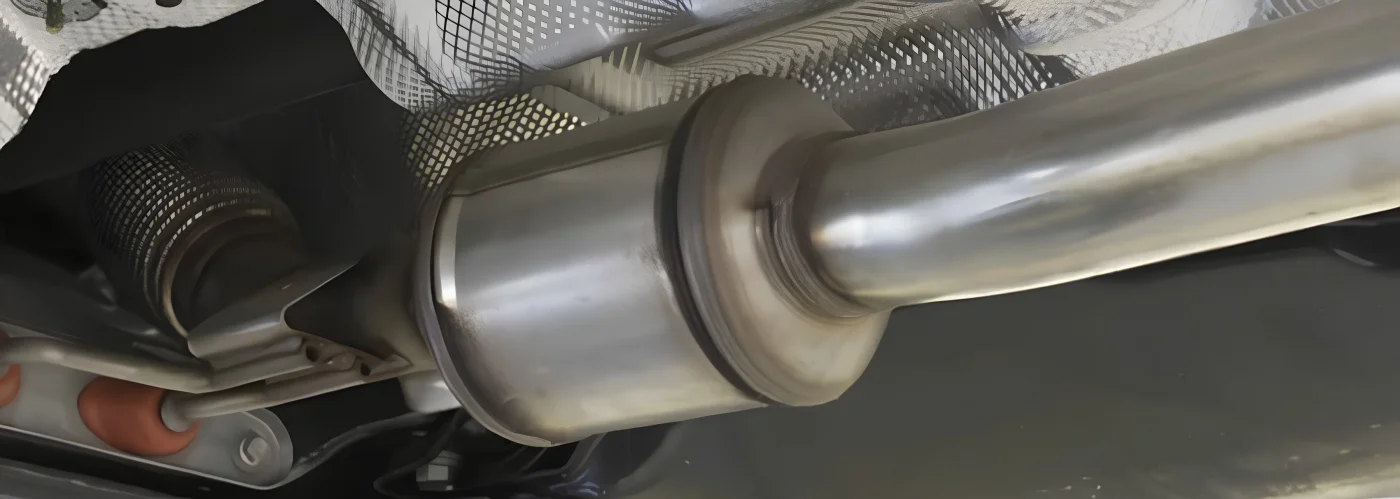
Catalytic converter theft has surged across the country over the past several years, and California has consistently ranked among the hardest-hit states, according to the National Insurance Crime Bureau. The reason comes down to what is inside the part. A catalytic converter uses three precious metals to convert harmful engine exhaust into less toxic gases before it leaves the tailpipe, and those metals are extraordinarily valuable. Because a converter sits underneath the vehicle in the open, California’s Bureau of Automotive Repair notes that an experienced thief using basic tools can remove one in one to two minutes. That combination of high value and easy access is what drives the crime.
The three precious metals that make converters a target are:
At Temecula Valley Toyota, our service and parts team can help you protect your vehicle before it becomes a target — and get you back on the road quickly if it already has.
Not every vehicle carries the same risk. Thieves gravitate toward two kinds of vehicles: those whose converters hold more precious metal, and those that are physically easy to get under.
Because a hybrid’s gasoline engine runs less often, its exhaust does not get as hot. Less heat makes a converter less efficient, so hybrid converters are engineered with a higher concentration of precious metals to compensate — which makes them worth significantly more on the black market. CARFAX reports that a standard converter can bring a thief roughly $25 to $300, while one from a hybrid can sell for up to $1,400, and notes that law enforcement continues to flag the Toyota Prius as a favorite target.
Higher ground clearance lets a thief slide underneath without jacking the vehicle up, and larger vehicles often carry more than one converter, increasing the potential payout. A tall ride height that owners value for capability is, unfortunately, the same feature that makes the exhaust system quick to reach. CARFAX data published in June 2026 for the Western region — Alaska, California, Hawaii, Nevada, Oregon and Washington — is dominated by full-size trucks and SUVs, led by the Ford F-150, Ram 2500, Ford Explorer and Chevrolet Silverado, with the Toyota Tacoma appearing tenth on that regional list.
One Toyota-specific note worth knowing: beginning with the 2024 model year, Toyota moved the Tacoma’s catalytic converter into the engine bay, which makes it considerably harder for a thief to reach.
The risk depends entirely on whether the vehicle has a combustion engine:
For high-clearance vehicles especially, a physical shield is the single most effective defense. Specialized manufacturers build heavy-duty catalytic converter shields that bolt to the vehicle’s existing frame and fully enclose the converter and exhaust piping.
The shield changes the math for a thief. Instead of a quick cut, they face a solid metal plate secured by specialized hardware, which forces a much longer, noisier effort with the wrong tools. There is limited published data on exactly how much time a shield adds, but as CARFAX notes, law enforcement officials say any added delay may be enough to send a thief looking for an easier target. The shield’s value is deterrence.
Installation quality is not only a fitment issue. The Bureau of Automotive Repair warns that a vehicle will fail its Smog Check if the theft prevention device modifies or damages the catalytic converter, or if any required identifying information on the converter is not visible. A shield should never be welded or attached directly to the converter itself. That is why BAR recommends having any theft prevention device installed by a licensed auto shop.
Our parts department can source a shield engineered to fit your specific vehicle, and our service technicians can install it correctly so it doesn’t interfere with underbody sensors or obscure required markings.
Discovering a stolen converter is usually announced by a loud roar the moment you start the engine. The repair is expensive, and understanding the cost and how insurance responds helps you act quickly.
Replacing a stolen converter on a modern vehicle is expensive, and published estimates vary widely by vehicle and by whether an OEM or CARB-compliant aftermarket part is used. As an estimated repair cost, RepairPal puts the average catalytic converter replacement between $2,283 and $2,473, while ConsumerAffairs found sample vehicle quotes averaging between $933 and $4,414. CARFAX reports that owners without insurance can pay as much as $3,000. These are estimated repair costs published by third parties, not a quote from our dealership. Where your vehicle lands depends on several parts and labor items:
In California, a replacement must meet strict emissions standards — meaning an inexpensive universal aftermarket converter generally is not legal to install.
If your vehicle has been hit, our parts department can source the exact OEM components needed to restore it to factory condition, and our technicians can install them and verify your exhaust is sealed, quiet, and compliant with California emissions law.
If you start your vehicle to that unmistakable roar, take these steps in order:
Our service and parts team can handle the replacement and the shield in one visit.
The information in this article is general guidance and does not constitute a specific diagnostic or repair recommendation for any individual vehicle. Repair and maintenance decisions should be made in consultation with a certified technician based on the specific condition of your vehicle.
Physical protection works best alongside good habits. Small choices about where and how you park can make your vehicle a less appealing target:
Drivers around Temecula and nearby Murrieta can reduce risk simply by being deliberate about these habits.
Some owners have their converter etched with the vehicle’s VIN, or marked with high-temperature paint. It is important to be realistic about what this does:
Etching is best treated as a low-cost complement to a shield — not a replacement for one.
California has taken direct aim at the resale market that makes this crime profitable, and it also regulates how a converter must be replaced.
Two state laws — Senate Bill 1087 and Assembly Bill 1740, both in effect since January 1, 2023 — work together to make stolen converters harder to sell:
Separately, the California Air Resources Board (CARB) requires that any replacement converter be one of the following — used converters have not been legal to advertise, sell, or install in California since July 10, 2008:
Converter theft tends to spike in the warmer months, when more vehicles sit outside overnight and thieves can work faster. Metals prices have also moved sharply. According to CARFAX, rhodium rose above $11,000 per ounce in March 2026 before easing to roughly $8,500 per ounce by May, after sitting around $5,000 for most of 2024 and 2025. CARFAX also reports that more than 137,000 converters were stolen nationwide in 2025 — down from the 2023 peak, though law enforcement agencies across the country are now warning of a resurgence. That combination makes now a sensible time to add protection.
The clearest sign is sound. The moment you start the engine you’ll hear a loud roar or rumble that gets louder as you accelerate, because the exhaust is no longer routed through the converter and muffler. You may also notice sputtering during acceleration, a stronger exhaust smell, and an illuminated check engine light, since the vehicle’s sensors detect the missing component. If you suspect it, don’t keep driving — have it inspected right away.
No. Under the federal Magnuson-Moss Warranty Act, a manufacturer cannot void your warranty simply because an aftermarket accessory was installed. As the Federal Trade Commission explains, coverage can be denied only if the aftermarket part itself was defective or improperly installed and caused the damage being claimed. A properly installed converter shield doesn’t do that. We still recommend professional installation so the shield is fitted correctly, doesn’t interfere with any underbody sensors, and doesn’t obscure identifying information in a way that would affect your Smog Check.
This information is provided for general educational purposes only and does not constitute legal advice. Warranty coverage depends on the specific terms of your vehicle’s warranty agreement. Consult your owner’s manual or a qualified legal professional for guidance on your individual situation.
Given unlimited time and heavy power tools, a determined thief could eventually get through almost anything — but that’s not how these thefts work. Converter theft depends on speed and quiet, and the Bureau of Automotive Repair notes an experienced thief can remove an unprotected converter in one to two minutes. A solid shield secured with tamper-resistant hardware turns that into a longer, louder, more awkward job, and most thieves simply move on to an easier, unprotected vehicle. The shield’s value is deterrence.
California has the strictest emissions rules in the country, and the California Air Resources Board (CARB) does not allow used catalytic converters to be sold or installed in the state. Any replacement must be either an original-equipment (OEM) converter or a CARB-compliant aftermarket unit that is certified for your vehicle’s specific engine family. Our parts department can source the correct compliant part for your vehicle.
If you would like to protect your vehicle or need a stolen converter replaced, our team is here to help. You can schedule a service appointment online, or contact our team with any questions. Our service and parts specialists can recommend the right protection for your specific vehicle.
The information in this article is general guidance and does not constitute a specific diagnostic or repair recommendation for any individual vehicle. Repair and maintenance decisions should be made in consultation with a certified technician based on the specific condition of your vehicle.
This information is provided for general educational purposes only and does not constitute legal advice. Warranty coverage depends on the specific terms of your vehicle’s warranty agreement. Consult your owner’s manual or a qualified legal professional for guidance on your individual situation.
This article is provided for general informational purposes only and does not constitute legal, financial, or insurance advice. Insurance coverage, deductibles, and premium impacts vary by policy and insurer — confirm details with your own provider. Laws and regulations are subject to change. For guidance specific to your situation, consult a qualified professional.
Repair cost figures referenced in this article are third-party estimates published by RepairPal, ConsumerAffairs, and CARFAX. They are provided for general reference only, are not a quote from Temecula Valley Toyota, and will vary by vehicle, parts selection, and required labor.
Toyota is taking a multi-pathway approach to vehicle electrification. The lineup spans hybrids, plug-in hybrids, and battery-electric models. Rather than commit to a single powertrain design, Toyota lets drivers choose the level of electrification that fits how they actually drive. Our showroom at 26631 Ynez Road in Temecula, CA 92591 is the local hub for…
Everyday driving puts your tires and wheels in the path of debris you cannot plan for. Toyota Tire and Wheel Protection is an optional, cancelable vehicle protection product offered through Toyota Financial Services. It covers repair or replacement when an eligible road hazard leaves a tire unable to hold air, or leaves a wheel unable…
Many drivers want to burn less fuel without giving up long road trips. Toyota plug-in hybrid electric vehicles (PHEVs) solve that problem by pairing a large battery with an efficient gasoline engine. For families in Murrieta and Temecula, a typical day means school drop-offs and local errands. A vehicle that covers those errands on pure…